

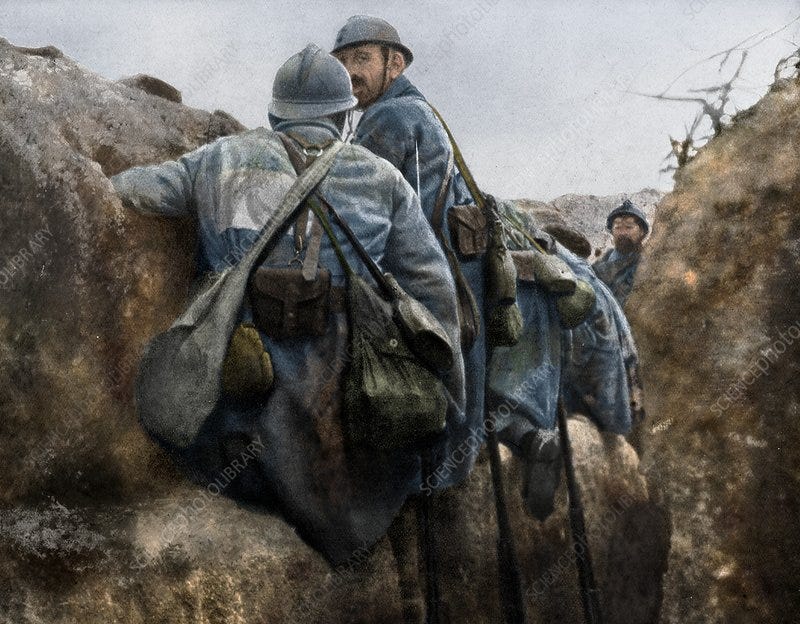
We speak often, and rightly, of the bravery of troops. In the present Iran campaign, nearly every analyst has praised the conduct and courage of the forces involved. Yet history suggests something both simple and profound: courage is far more universal than we like to admit. People are people, and the capacity for bravery is not the property of any one nation.
History bears this out. The Vikings acquired a fearsome reputation, yet their modern Scandinavian descendants have fought in dramatically different ways depending on circumstance. Denmark capitulated quickly in 1940 but later protected its Jewish population with remarkable resolve. Norway and Finland used terrain, leadership, and determination to resist far stronger invaders. None of this reflects national character so much as geography, leadership, and the stakes at hand.
Americans have long indulged in jokes about French military performance, forgetting Lafayette, forgetting Verdun, forgetting the endurance of French soldiers in the trenches. We forget, too, that American troops in both world wars often faced German forces already exhausted by years of fighting. The Italians, likewise, are the butt of easy humor, though anyone who has met Italian Americans knows how flimsy such caricatures are. Bravery is not distributed by passport.
Culture and motivation matter far more. In the American Civil War, Northerners and Southerners came from the same stock, yet fought with different intensity at different moments because they fought for different things — home, union, emancipation, or simply survival. Japanese soldiers in the Second World War were renowned for their ferocity, yet their adversaries in China endured unimaginable losses and continued to fight with equal resolve. Russians performed poorly early in the war, then fought with extraordinary endurance once leadership, strategy, and motivation aligned. The people had not changed; the conditions had.
Perhaps this is what commentators mean when they praise “the fighters.” They are praising not biology but culture, not destiny but circumstance. When some modern voices speak of cultivating a “warrior ethos” by narrowing who serves, they are mistaking culture for exclusion. In an age far removed from hand-to-hand combat, it is a curious priority.
Why people fight matters. Ukrainians have fought with astonishing resilience because they are defending their homes, their families, and their future. They have endured winters, bombardments, occupation, and staggering losses, yet they continue. That is not because Ukrainians are inherently braver than Russians or North Koreans. It is because they understand what is at stake, because their leadership has given them purpose, and because they believe the cause is their own. History suggests that when those conditions align, ordinary people are capable of extraordinary courage.
People are people. Soldiers, sailors, and pilots are shaped by training, leadership, and the cause they believe they are serving. It is natural for nations to think of their own as somehow special — culturally it may even be useful — but the reality is more complicated. Bravery is universal. What varies is the story a nation tells its fighters, and the principles it asks them to defend.