

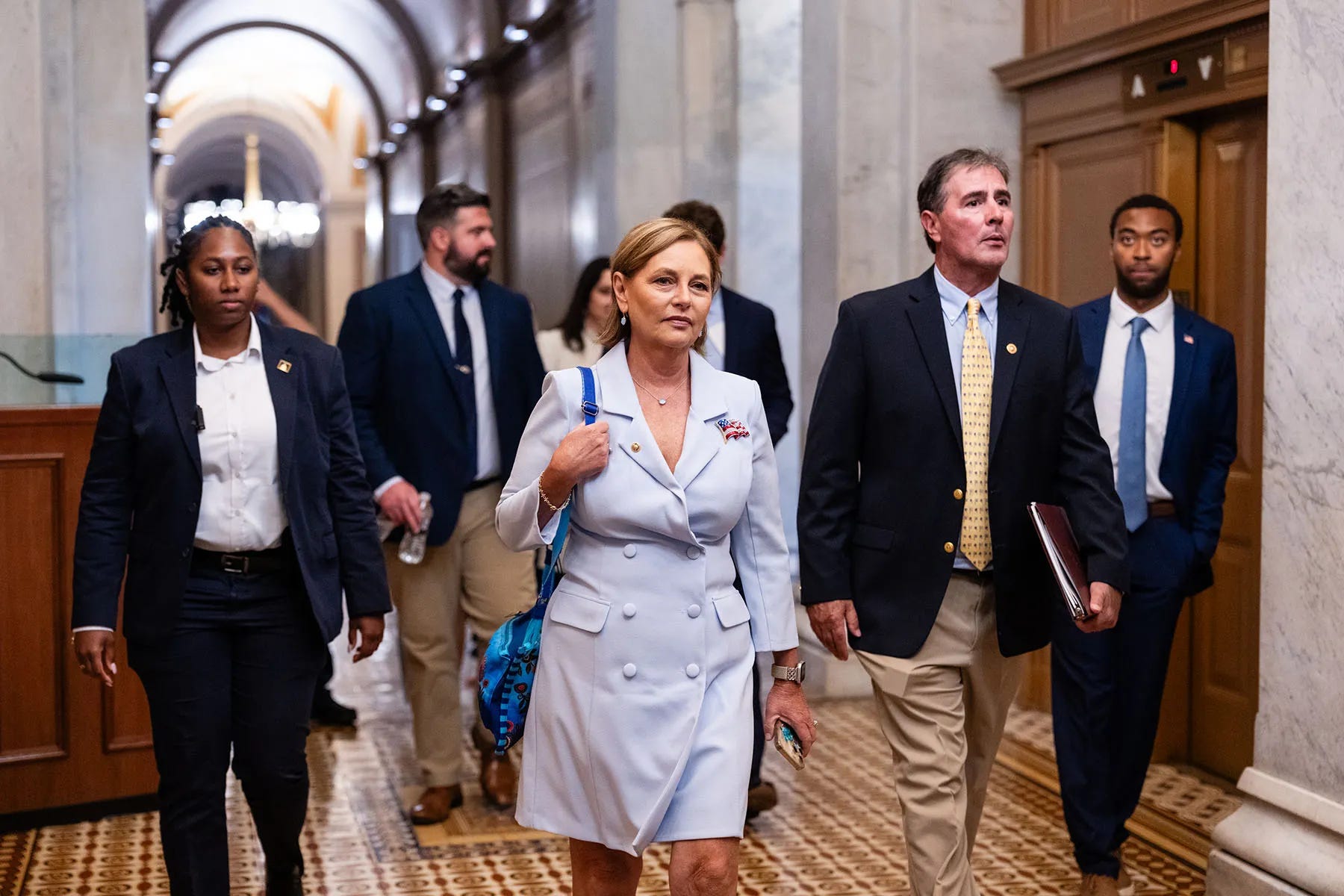
Late Senator Lindsey Graham’s little sister, South Carolina interim Senator Darline Graham, made national headlines this week after a woefully deficient debate performance. Asked about Taiwan and the South China Sea, she admitted she was “not that informed on national security” and that national security was “not my thing.” She also managed to place South Carolina’s population at roughly 50 million rather than 5.5 million.
Many consider it a crisis that someone so seemingly unprepared could be elevated to the United States Senate. And, of course, the fact that President Trump recommended her appointment — and has endorsed her campaign — makes her instantly suspicious to many of us. Gov. Henry McMaster formally appointed her after Lindsey Graham’s death.
But is she really unqualified?
Recently, Senator Bill Cassidy approved the president’s former personal lawyer, Todd Blanche, as attorney general after giving us hope he might not. Cassidy’s vote helped clear the way for confirmation after Collins and Murkowski opposed Blanche. Cassidy has also found himself criticizing vaccine policy after voting to confirm Kennedy at public health. I’m not a doctor like Cassidy, but I wouldn’t have needed a medical degree to see that coming.
Which brings us back to Darline Graham.
She will spend enormous amounts of time raising money, and she will vote with her party and support the president as directed. That is not a peculiar defect of Darline Graham. It is increasingly the job description Washington has created. Independent votes have become sufficiently unusual that Collins and Murkowski are conspicuous when they cast them — as are Republicans approaching retirement or confronted with proposals so extraordinary that party loyalty finally reaches its limit.
That should bother us more than Graham’s debate performance.
The United States Senate was not designed as a collection of 100 party delegates. A six‑year term is meant to create distance from immediate political pressure. The office is supposed to require judgment: reading, learning, questioning, occasionally telling a president of your own party that he is wrong.
Graham does bring something to the job. She has a master’s degree in rehabilitation counseling and nearly three decades of public service in South Carolina, including leadership of the state Commission for the Blind and work in vocational rehabilitation and workforce development. That is not nothing.
But are we dumbing down what a distinguished role should be?
Certainly.
The more uncomfortable question is whether Darline Graham represents the cause or merely the result.
Washington has spent decades lowering the value of individual judgment. Primaries punish deviation. Fundraising consumes enormous amounts of time. Party media punish apostasy almost instantly. Presidents increasingly expect senators of their own party to function as allies rather than as an independent branch of government.
Under those conditions, expertise becomes strangely optional. A senator can know a great deal about foreign affairs and still vote as the party requires. A physician can understand medicine and still enable people whose public‑health decisions he later criticizes. Knowledge matters only when someone is prepared to act upon it.
Darline Graham should know more about national security. Anyone seeking six years in the United States Senate should. Her answer was dreadful.
But given what we now demand from Congress, she may not be as anomalous as the reaction suggests. She may simply be less polished about the arrangement.
Preparation matters.
The problem is that Washington no longer seems to require it.Late Senator Lindsey Graham’s little sister, South Carolina interim Senator Darline Graham, made national headlines this week after a woefully deficient debate performance. Asked about Taiwan and the South China Sea, she admitted she was “not that informed on national security” and that national security was “not my thing.” She also managed to place South Carolina’s population at roughly 50 million rather than 5.5 million.
Many consider it a crisis that someone so seemingly unprepared could be elevated to the United States Senate. And, of course, the fact that President Trump recommended her appointment — and has endorsed her campaign — makes her instantly suspicious to many of us. Gov. Henry McMaster formally appointed her after Lindsey Graham’s death.
But is she really unqualified?
Recently, Senator Bill Cassidy approved the president’s former personal lawyer, Todd Blanche, as attorney general after giving us hope he might not. Cassidy’s vote helped clear the way for confirmation after Collins and Murkowski opposed Blanche. Cassidy has also found himself criticizing vaccine policy after voting to confirm Kennedy at public health. I’m not a doctor like Cassidy, but I wouldn’t have needed a medical degree to see that coming.
Which brings us back to Darline Graham.
She will spend enormous amounts of time raising money, and she will vote with her party and support the president as directed. That is not a peculiar defect of Darline Graham. It is increasingly the job description Washington has created. Independent votes have become sufficiently unusual that Collins and Murkowski are conspicuous when they cast them — as are Republicans approaching retirement or confronted with proposals so extraordinary that party loyalty finally reaches its limit.
That should bother us more than Graham’s debate performance.
The United States Senate was not designed as a collection of 100 party delegates. A six‑year term is meant to create distance from immediate political pressure. The office is supposed to require judgment: reading, learning, questioning, occasionally telling a president of your own party that he is wrong.
Graham does bring something to the job. She has a master’s degree in rehabilitation counseling and nearly three decades of public service in South Carolina, including leadership of the state Commission for the Blind and work in vocational rehabilitation and workforce development. That is not nothing.
But are we dumbing down what a distinguished role should be?
Certainly.
The more uncomfortable question is whether Darline Graham represents the cause or merely the result.
Washington has spent decades lowering the value of individual judgment. Primaries punish deviation. Fundraising consumes enormous amounts of time. Party media punish apostasy almost instantly. Presidents increasingly expect senators of their own party to function as allies rather than as an independent branch of government.
Under those conditions, expertise becomes strangely optional. A senator can know a great deal about foreign affairs and still vote as the party requires. A physician can understand medicine and still enable people whose public‑health decisions he later criticizes. Knowledge matters only when someone is prepared to act upon it.
Darline Graham should know more about national security. Anyone seeking six years in the United States Senate should. Her answer was dreadful.
But given what we now demand from Congress, she may not be as anomalous as the reaction suggests. She may simply be less polished about the arrangement.
Preparation matters.
The problem is that Washington no longer seems to require it.