

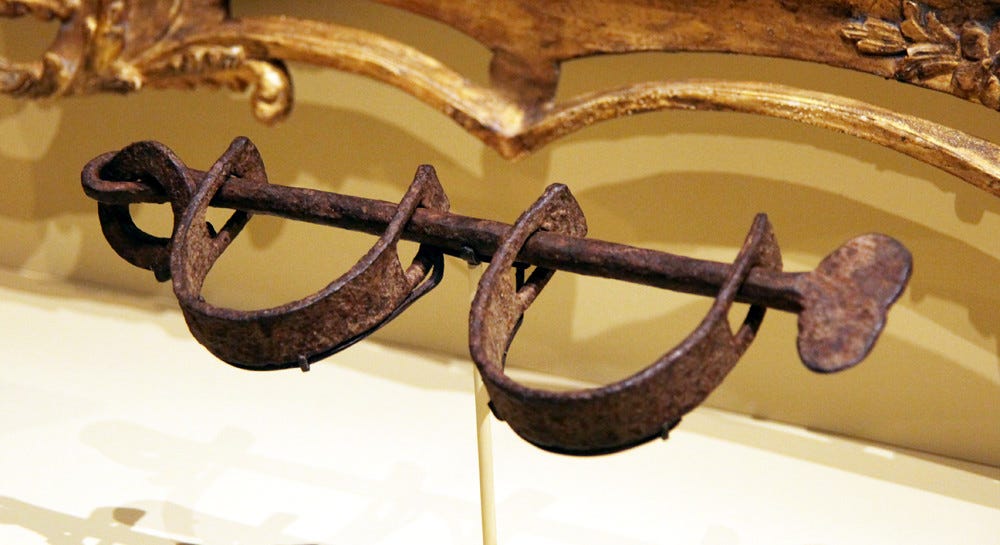
There were reports this week that, amid everything else happening in the world, the administration is once again examining the Smithsonian—this time extending its attention beyond the National Museum of African American History and Culture. The concern, according to those reports, is that certain exhibits portray America in an unduly negative light.
The controversy is about more than museums.
Over the past two decades, the phrase administrative state has entered our political vocabulary, often paired with the more ominous deep state. In this telling, unelected bureaucrats frustrate the will of elected leaders and substitute their own preferences for those of the public.
Moments like this remind us why professional civil servants are not a flaw in democratic government. They are one of its safeguards.
We do not want the interpretation of our nation’s history, values, and cultural memory rewritten every time political power changes hands. Museums, archives, and historical institutions should be guided primarily by historians, curators, and scholars—unelected, yes, but ultimately accountable through elected officials, professional standards, and the rule of law. Their responsibility is not to flatter the present moment. It is to preserve the past as faithfully and honestly as the evidence allows.
The same principle applies well beyond museums. We rely on career military officers rather than partisan generals, career diplomats rather than campaign volunteers, career scientists rather than political operatives, and professional archivists rather than whichever administration happens to hold office. In each case, expertise and institutional memory provide continuity that democratic politics, by design, cannot.
That continuity is one of the great, if often overlooked, achievements of the modern state. Whether the subject is public health, environmental regulation, military planning, historical preservation, or immigration administration, governments necessarily depend upon professionals whose work extends beyond a single election cycle. Bureaucracies are imperfect. They can become inefficient, insular, and occasionally resistant to change. But they also preserve knowledge, maintain competence, and provide stability when politics becomes turbulent.
The administrative state is not a rival to democracy. It is one of the structures that prevents democracy from being rewritten every four years.
Every election should change policy.
It should not require us to rewrite history.
Wonderful piece! And so seemingly self-evident yet almost shockingly novel. I can't recall having read such a carefully fleshed-out explication of what is dismayingly routinely dismissed as "the bureaucracy" in I don't know when. My own father was just such a civil servant (!) back in the Eisenhower/McCarthy/J. Edgar Hoover and, oh yes, Roy Cohn daze. 'Tweren't easy as I recall, child though I then was. And the Powers that Be now seem hell bent on establishing a new low. Heaven help us. Meanwhile, thanks yet again for your thoughtfulness and insight. They're a balm, they are. A positive balm.