

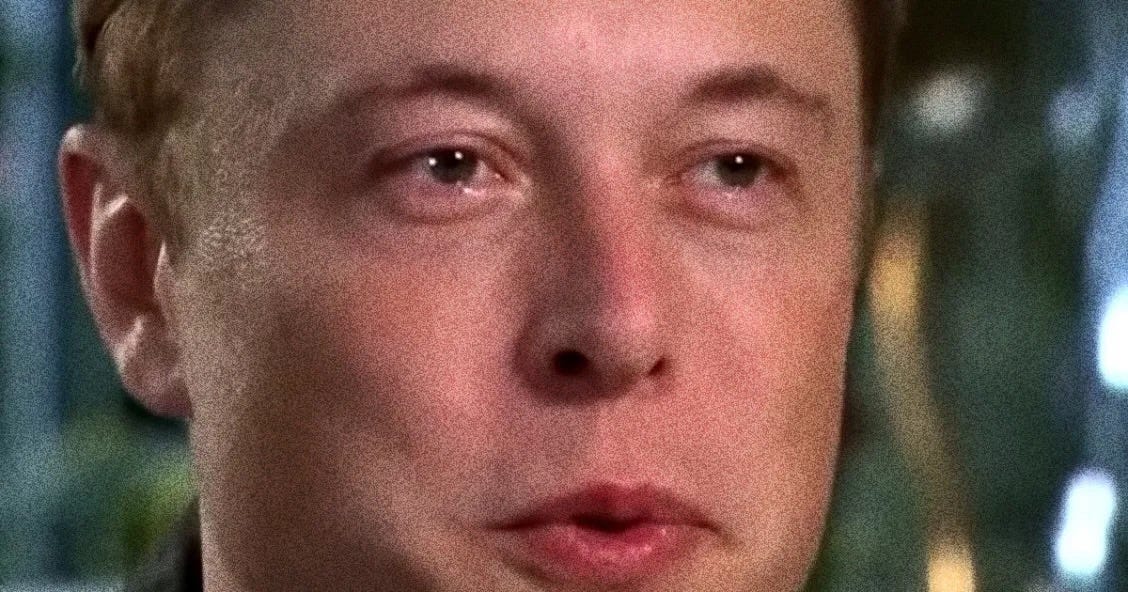
Elon Musk, who once entertained the idea of financing a third political party, has apparently decided that financing much of an existing one is the more practical undertaking.
The trouble is that the party already has a rather formidable personality at its center, one who may be making Musk’s investment considerably less effective.
Musk is pouring money into Republican congressional campaigns at a difficult moment for the party. Republicans face the familiar disadvantages of a midterm election, compounded by Donald Trump’s low approval ratings. Even the Senate, where Republicans might ordinarily expect to enjoy a more favorable position, has become a source of concern.
Democrats are understandably worried about Musk’s enormous financial resources. Money matters in American politics. An infusion of cash can transform a close race, financing advertising, organization, and turnout efforts precisely when voters are making their decisions.
And experience counsels against excessive optimism, particularly where Trump is concerned. He has repeatedly demonstrated an ability to attract voters whom pollsters and political professionals struggle to account for. His political obituary has been written rather too often.
But this election presents a different problem.
Trump has been traveling the country, appearing before enthusiastic audiences and increasingly indulging his preference for improvisation over prepared remarks. He recently told one audience that he could say virtually anything and receive applause.
He seems determined to test the proposition.
At a campaign appearance in Youngstown, Ohio, Trump became particularly interested in the physique of Senator Jon Husted. He has returned to the subject of male candidates’ physical attributes on other occasions.
Ordinarily, such attention to the male form might be welcomed as evidence of a politician broadening his appeal. It is a rather unexpected development, however, in a party whose relationship with the LGBTQ community has often been less than affectionate, and whose secretary of defense has used disparaging language about gay people.
The remainder of Trump’s remarks frequently wander through familiar territory: personal grievances, old enemies, perceived betrayals, and the various indignities he believes he has suffered. His supporters appear to find these recollections as absorbing as he does.
The difficulty for Republicans is that Trump has an extraordinary ability to take all the air out of a room, including a virtual one.
Imagine spending millions of dollars on carefully crafted advertisements in Ohio, explaining how Republican policies will protect jobs, improve wages, and strengthen the economy. Then imagine the president arriving in Youngstown and delivering an extended appreciation of a senator’s backside. Nor is extolling the virtues of Vladimir Putin's leadership likely to be particularly helpful in winning over undecided voters.
Which story do you suppose dominates the following morning’s coverage?
Musk can purchase advertising time. He cannot purchase the public’s attention once Trump has claimed it.
There is also the question of whether Trump’s appearances reflect deliberate political choices or an inability to maintain a coherent campaign message. Is he unwilling to stay on message? Are his advisers unable to persuade him of the message? Or does he simply prefer the applause of a friendly crowd to the less gratifying business of persuading undecided voters?
Whatever the explanation, the consequences may be much the same.
Money matters enormously in American politics, and Musk has more of it than almost anyone. His spending may yet help Republicans survive races they might otherwise lose. But money is most useful when it reinforces a coherent political message and reaches voters who remain open to persuasion.
Some of those voters may already have made up their minds. Others may already have voted. And still others may be paying more attention to the president’s latest improvisation than to anything Musk has financed.
Trump has spent much of his political career demonstrating that he can command attention without spending nearly as much money as his opponents.
Elon Musk may now discover that commanding attention and directing it toward something useful are two very different things.
Money can buy an astonishing amount of political advertising. It cannot always buy the conversation.