

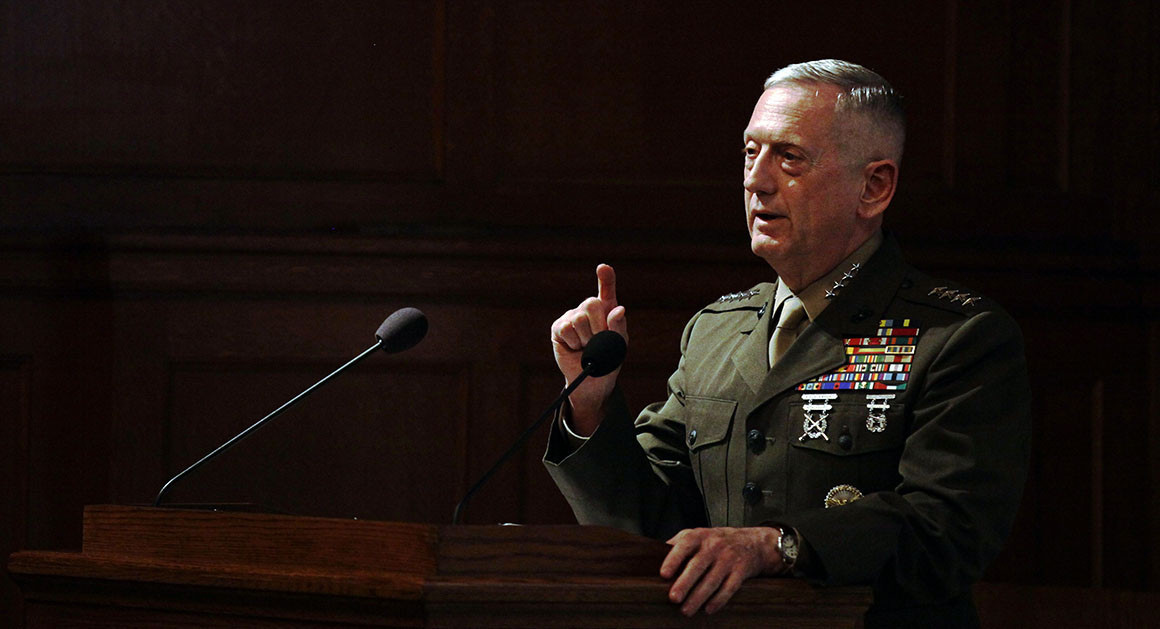
There was, not long ago, a certain unease when James Mattis was appointed Secretary of Defense. The concern was not difficult to understand. In a constitutional system, the military answers to civilian authority, and the principle is not ornamental. It reflects a belief that those entrusted with force should ultimately be guided by those accountable to the public.
Mattis, after all, carried the nickname “Mad Dog,” which did little to reassure those already inclined to worry that a soldier’s instincts might not align with the restraint required of national leadership. The objection was straightforward: military leaders are trained to win wars. Civilian leaders are meant to decide when those wars are worth fighting.
That distinction remains important.
But recent experience has complicated it.
Under Donald Trump and Pete Hegseth, the language surrounding American military power has shifted toward a more overt emphasis on lethality and dominance, even as the tempo of American engagement abroad has increased. In that context, the earlier concern—that military leaders might be too inclined toward force—now seems less certain.
Indeed, one is struck by the contrast.
Senior military officers, particularly those who have commanded large formations, tend to develop a familiarity with consequence that is difficult to replicate elsewhere. They are responsible not only for outcomes, but for the lives of those who carry them out. Leadership at that scale requires judgment, delegation, and, often, restraint. The use of force is not theoretical; it is immediate, personal, and irreversible.
It is therefore not surprising that many of the most respected American generals have spoken with caution about the limits of military power. They understand, perhaps more clearly than most, that success in war is rarely as complete—or as lasting—as it appears in planning.
This does not mean that military leaders should replace civilian authority. That principle remains foundational. Nor does it suggest that generals are immune to ambition or error.
But it does suggest that the earlier discomfort with figures like Mattis may have been, at least in part, misdirected.
Military leaders are not detached from the world. If anything, their experience places them in closer contact with its realities—through alliances, joint operations, and the constant negotiation between force and diplomacy. Civilian leaders, by contrast, may find their judgment shaped more heavily by domestic pressures and political incentives.
The removal of several senior officers in recent years sharpens the question. It is difficult to avoid the possibility that what was lost were not merely positions, but perspectives—voices inclined to question the trajectory of events.
There are, of course, risks in any system that elevates the influence of the military. Democracies have learned, sometimes painfully, the importance of maintaining civilian control.
But there are also risks in dismissing the perspective of those who have seen the consequences of force most directly.
The question is not whether military leaders should govern.
It is whether their experience should be taken more seriously than it sometimes has been.
In retrospect, the reaction to Mattis may say as much about the moment as it does about the man.
We feared that a soldier might think too readily in terms of war.
We did not anticipate that civilians might begin to do the same.