

High school sports in Northern Virginia do not carry the same meaning they once did. Some of that is inevitable. Teenagers now inhabit a world of endless alternatives—club sports, streaming entertainment, social media, year-round specialization. Attention itself has become fragmented.
But some of the change was institutional, and self-inflicted.
When my sister and I played basketball at Robinson, advancement was scarce. Only two teams reached regionals. Only one advanced to states. The regular season mattered because, for most teams, it was the season. Every district game carried consequence. A bad week could end everything.
Today, nearly every team qualifies for district tournaments, and most continue on to regionals. Six classifications have also produced unusually small districts in some areas. In Loudoun County, for example, the four-team Catoctin District leaves basketball teams playing only six district games and against fourteen non-district opponents—games that often carry little bearing on advancement or rivalry.
The dilution extends beyond scheduling. All-district and all-region teams have expanded so broadly that distinction itself has weakened. On the all-Northern District team my senior season, four of the five first-team players went Division I. The recognition carried weight because it was difficult to attain.
Today, the pressure often falls less on excellence than inclusion. Honors expand, but meaning contracts.
There are other pressures as well. In basketball and football, private schools increasingly pull elite athletes away from public competition. In soccer, club commitments increasingly do the same. Families respond rationally to incentives. If the public-school experience feels secondary, eventually many top athletes will treat it that way.
And yet, strangely enough, social media may have helped reverse part of the decline.
About thirteen years ago, I started an Instagram account simply to share photos of my son’s club soccer team. Opponents began following it. Then nearby teams. Eventually I renamed it NOVAsoccersource, and the audience continued to grow.
The breakthrough came when Yorktown reached the state final. Players across the region followed the run in real time, and suddenly the account no longer belonged to one team.
That turned out to be the key.
The account works precisely because it no longer feels like mine. The players themselves supply much of the energy. They share highlights, repost photos, follow rivals, debate rankings, and learn about players beyond their own club circles.
Visibility in club soccer is usually narrow: your league, your team, your age group. High school sports, at their best, create something broader—a shared local stage.
Social media, paradoxically, helped restore that stage.
Last year delivered perhaps the clearest example of how this new ecosystem works. In the regional quarterfinal between Wakefield and heavily favored McLean, coach Eddie Carrasquillo ripped off his shirt in celebration after a dramatic penalty-shootout win.
The clip exploded—more than 30,000 views—and it still circulates among players today.
It wasn’t just a viral moment. It became shared memory, the kind of story that once spread only through packed gyms and crowded bleachers. Now it lives everywhere at once.
Today, players across Northern Virginia know one another in ways that barely existed a decade ago. Boys follow girls soccer. Loudoun players know who is scoring in Arlington. Prince William teams pay attention to Fairfax.
The ecosystem feels connected.
And because more people are watching, the games feel like they matter again.
Each week we post a “Top 7” ranking for boys and girls soccer. The number is intentional: the list should be small enough that omission still carries emotional force without becoming demoralizing. By Friday night, players are already thinking about movement in the poll. Coaches pretend not to care. Players absolutely do.
The same is true of player-of-the-week honors, podcast interviews, and commitment announcements. Recognition creates investment. Investment creates atmosphere. Atmosphere restores meaning.
What emerged was something many institutions had accidentally weakened: scarcity, narrative, and local identity.
Several years ago, only a handful of Division I-level soccer players across Northern Virginia still chose to play high school soccer alongside their club commitments. Recently, that number rose dramatically.
When I asked respected local player Andrew Kennedy why so many elite players were playing with their schools again, his answer surprised me.
He mentioned NOVAsoccersource. Local YouTuber Futbol Familia deserves mention as well.
That overstates my role, but I understood his point. The athletes were no longer playing only for teammates and parents. They were participating in a regional conversation. Their games had visibility. Their stories had permanence. Their schools felt connected to something larger again.
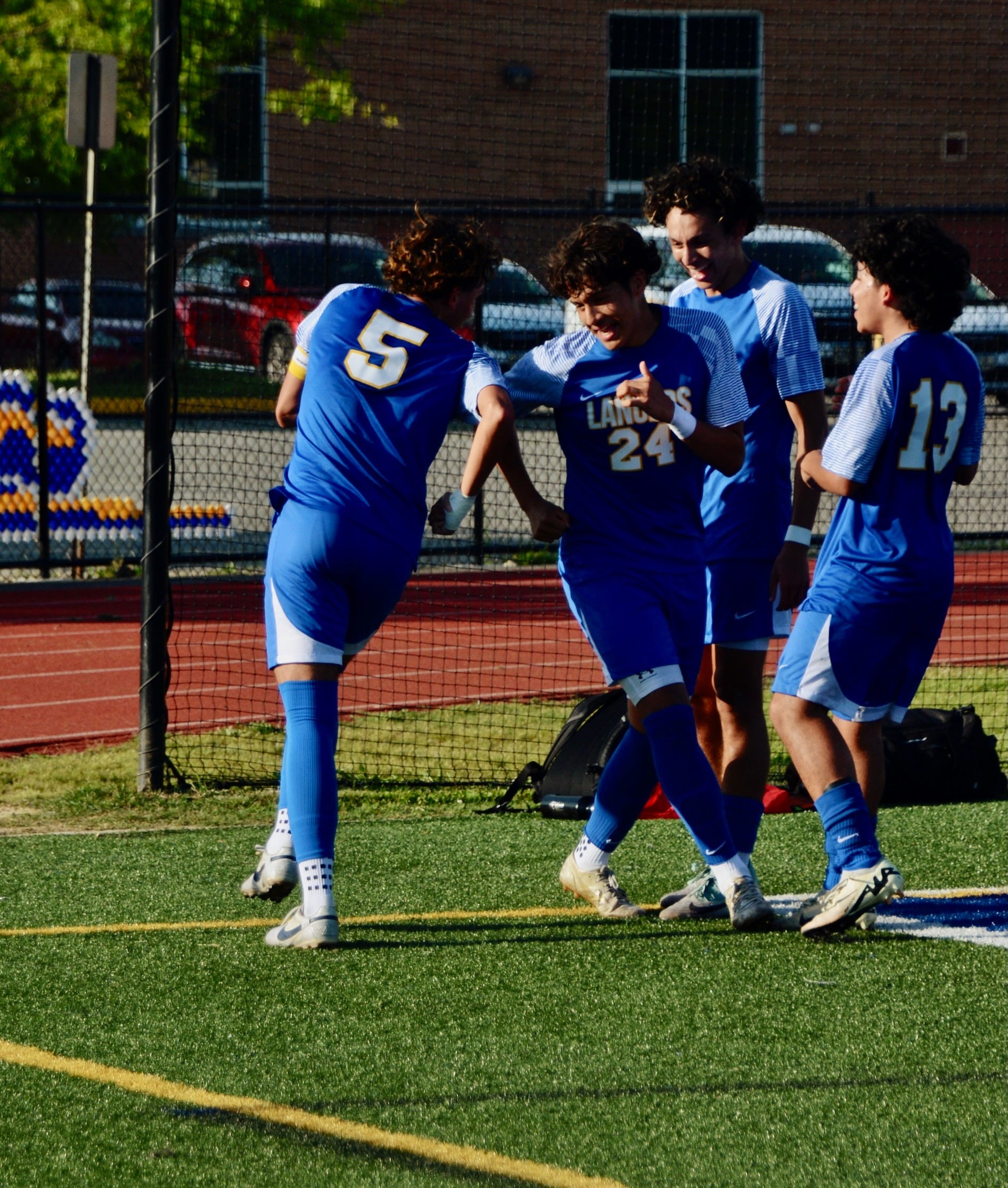
I have tried to replicate some of this with basketball through NOVAHoopLegends, which grew out of my podcast work. But the dynamic is different. Basketball culture in Northern Virginia still belongs as much to adults as to the players themselves.
Soccer, for whatever reason, became more fully player-driven. The energy flows upward rather than downward. I’m not sure I can fully explain why, but the difference is unmistakable.
And the emotional stakes are real. I see it in the messages players send—the thank-yous for posting a photo, the excitement when a highlight gets shared, the gratitude from photographers whose work reaches a broader audience.
Passion cannot simply be mandated by institutions. It emerges when incentives, visibility, competition, and identity align. The mistake many organizations make is assuming participation alone creates meaning. Often the opposite is true.
Meaning comes from stakes. From scarcity. From the feeling that something important can be won—or missed.
For a time, Northern Virginia high school sports lost some of that.
Ironically, the same social-media culture often blamed for fragmenting adolescence helped bring part of it back.
And on the right Friday night, with rankings looming, highlights spreading, and packed student sections following every result, it can feel—at least for a few hours—like the games matter again.
Maybe we need a NOVAsoccersource version of the Post's All Met? All NOVA? You know, in your free time?