

As the quarrel with Iran drags on with no easy solution in sight, the danger presented by the Iranian regime seems to grow larger in the American imagination.
There is plenty to work with.
Iran is an authoritarian state that has killed thousands of its own people, supported armed proxies throughout the Middle East and brought its nuclear program close to weapons-grade capability. The possibility of an Iranian nuclear weapon is not exactly comforting.
But Iran is hardly the only dangerous country in the world.
In the same week that Iran is described as a threat requiring American military action, American representatives were sitting across a table from Vladimir Putin. Steve Witkoff told the former KGB officer, “When we retire, we’ll have all these incredible stories and incredible memories, and yours will be right at the top of it all.”
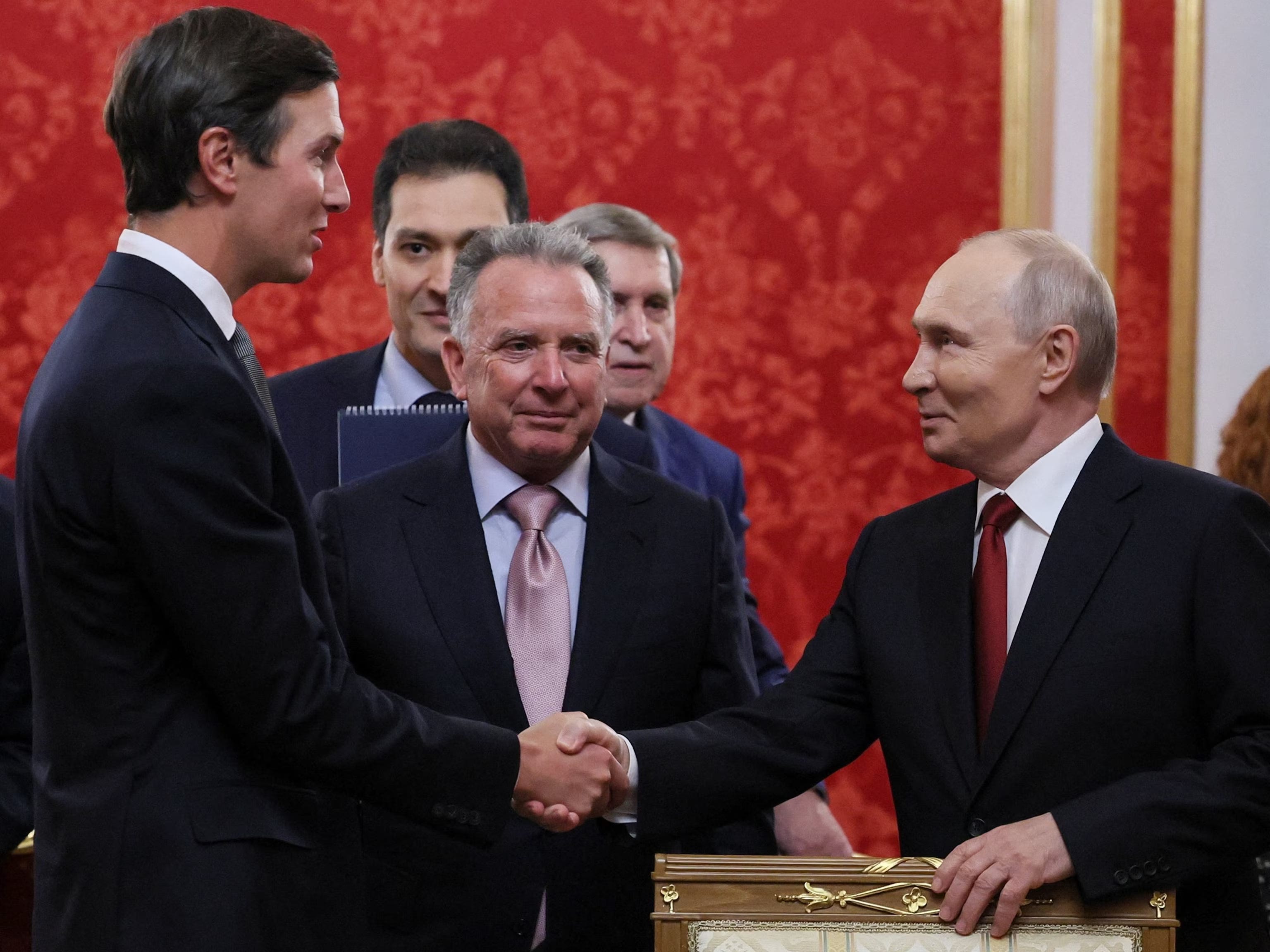
Putin possesses considerably more than the possibility of nuclear weapons. Russia has one of the largest nuclear arsenals in the world. It invaded Ukraine. Political opposition at home has been suppressed, and Russians have received extraordinary prison sentences for speaking against the war. Russia has also absorbed casualties on a scale almost unimaginable to Americans: estimates now place its battlefield losses at roughly 1.4 million, including perhaps 400,000 to 450,000 dead.
And yet we negotiate with Putin.
Of course we do.
North Korea possesses nuclear weapons and presents a continuing danger to South Korea and Japan. China is a nuclear power, an authoritarian state and a potential military threat to Taiwan and other American interests in Asia. Saudi Arabia is an absolute monarchy with an appalling human-rights record; fifteen of the nineteen September 11 hijackers were Saudi nationals.
And yet we deal with all of them.
Israel presents another complication. It is an American ally and a democracy, but its conduct in Gaza has produced allegations of genocide and intense international condemnation. Britain and other Western governments have recently moved toward sanctions and trade restrictions aimed at illegal settlements in the West Bank. Israel has repeatedly demonstrated that it will act forcefully — sometimes ruthlessly — when its government believes its national interests require it.
The point is not that these countries are equivalent.
They plainly are not.
The point is that dividing the world into good governments and bad governments turns out to be a remarkably unreliable foundation for foreign policy.
Iran itself should have taught us that.
The relationship between Iran and the United States did not begin with the hostage crisis. In 1953, American and British intelligence helped overthrow Prime Minister Mohammad Mossadegh. The Shah became one of America’s most important regional allies. The revolution overthrew him. American diplomats were taken hostage. Then came the Iran-Iraq War, proxy conflicts, sanctions, nuclear confrontation and decades of mutual hostility.
Iran has frequently acted against American interests and those of American allies. It has supported violent organizations and repressed its own citizens.
But something else is also visible in its behavior.
The Iranian government has demonstrated an instinct for self-preservation.
That should not be confused with benevolence. It is something much less flattering and perhaps more useful: calculation.
During earlier confrontations with Israel and the United States, Iran sometimes escalated and but often pulled back. Its leaders repeatedly had to weigh retaliation against the possibility that retaliation might bring something worse. Now the present conflict has expanded to the Strait of Hormuz and American allies throughout the region.
Iran’s actions are dangerous. They are also not inexplicable.
They have objectives.
They are tactical.
That distinction matters because nations do not have to like one another to negotiate. They do not even have to trust one another. They merely have to believe that the other side would rather survive than die.
That is not friendship. It is diplomacy.
Perhaps what is missing most conspicuously from the present international order is an institution sufficiently credible that adversaries believe disputes can be taken there without the result simply reflecting the wishes of whichever powerful country has the most aircraft carriers.
The United Nations was supposed to provide some of that structure. It has rarely fulfilled the ambition completely, and its Security Council embeds the power politics of 1945 directly into its design. But the principle behind it remains indispensable.
Because who is good and who is bad depends rather considerably on who is doing the judging.
Americans look at Iran and see repression, proxies and nuclear danger. Iranians look at their history and remember 1953, the Shah, American support for Iraq during portions of the Iran-Iraq War, sanctions and Israeli and American attacks. Russians have their history. Israelis have theirs. Palestinians have theirs. Chinese have theirs. Ukrainians certainly have theirs.
History does not make every claim equally valid.
But it does make universal agreement about virtue rather difficult.
That is why international institutions matter. Their purpose should not be to determine which country is morally pure.
The search could take some time.
Their purpose is to establish rules that apply even when the parties despise one another.
And that may become increasingly important. Military power itself is changing. Drones, missiles, cyberwarfare and asymmetric weapons are allowing smaller states and even nonstate actors to impose costs that once required great armies. The countries capable of dictating terms today may not always be capable of doing so tomorrow.
A durable international order therefore cannot depend entirely upon deciding who is good, who is bad, and who is presently strong enough to make the distinction stick.
Eventually, everyone needs rules for the day when someone else is stronger.