

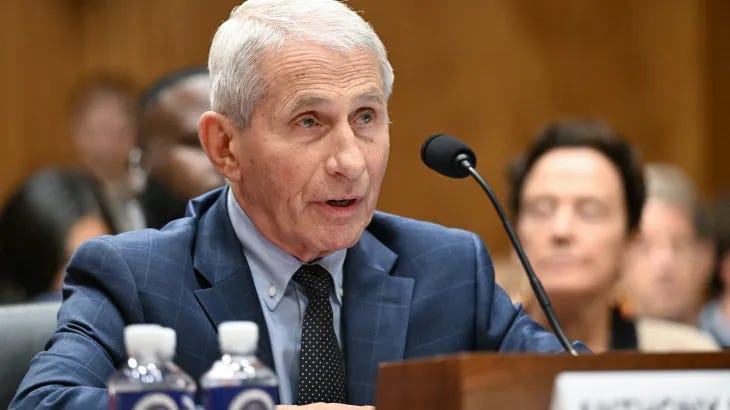
Anthony Fauci appeared before a Senate committee this week, facing sharp questioning about his performance during the COVID‑19 pandemic and his views on the virus. In theory, bureaucrats can be dismissed for failing to perform. Oversight hearings exist to examine mistakes and improve future responses. But attacking a retired civil servant — particularly one with a long record in public health — misses the point. The goal should be understanding, not theatrics.
During the pandemic, President Trump made several widely criticized statements — suggesting disinfectant injections, questioning the value of testing, and offering improvised medical theories. Other officials, including Deborah Birx and leaders around the world, made decisions that deserve scrutiny as well. The crisis was chaotic, frightening, and often poorly understood. Mistakes were made across institutions, not by a single individual.
The country faced the real possibility of running out of hospital beds. We emerged from lockdown with staggering casualties and a long list of lessons that should inform future planning. The relevant questions now are practical ones: Are we investing in better testing? Are local governments receiving the support they need? Are we improving global threat detection? These are the matters that determine whether we are prepared for the next pandemic.
Instead, some prefer to summon a retired bureaucrat — a man widely regarded as a hero of the AIDS crisis and one of the nation’s most experienced public‑health experts — and treat him as the central villain. Tough questions are appropriate; scapegoating is not. If accountability is the goal, it must extend beyond one scientist. It must include the officials who supervised him, the political leaders who set policy, and the administration that shaped the national response.
We live in an era when the administration often prefers not to revisit the darker chapters of our recent history — except when doing so is politically useful. If we are serious about accountability, we must look to those who were most accountable: elected leaders, not career scientists. Congress should demand evidence, examine decisions, and insist on reforms. But it should not pretend that responsibility rests solely with the people who worked beneath the policymakers.
In public health, expertise matters. So does honest oversight. If we want better outcomes, we must direct our scrutiny toward the right targets — and use every democratic tool available to ensure that the next crisis is handled with more competence than the last.