

Many Europeans seem to have a deeper faith in institutions—and somewhat less in personality—than Americans. I often wonder how much of that sensibility was forged in the catastrophes of the twentieth century: two world wars that devastated the continent, a Cold War that divided Europe in half, and the enduring memory that annihilation was not theoretical but entirely possible. Even long before that, from Roman times onward, Europe’s peoples found themselves in recurring conflict. History taught them that personal rule is fragile, while institutions, when carefully built, can outlast the ambitions of individual leaders.
Near the end of the twentieth century, Europe made a remarkable choice. It built NATO, the common market, and eventually today’s European Union. Nations voluntarily surrendered pieces of their sovereignty to institutions more distant than their own governments. Many even abandoned national currencies in favor of one tied to the fortunes of the continent as a whole.
This was not naïveté.
It was a conscious wager that shared institutions offered among other things better protection against Europe’s oldest habit: war.
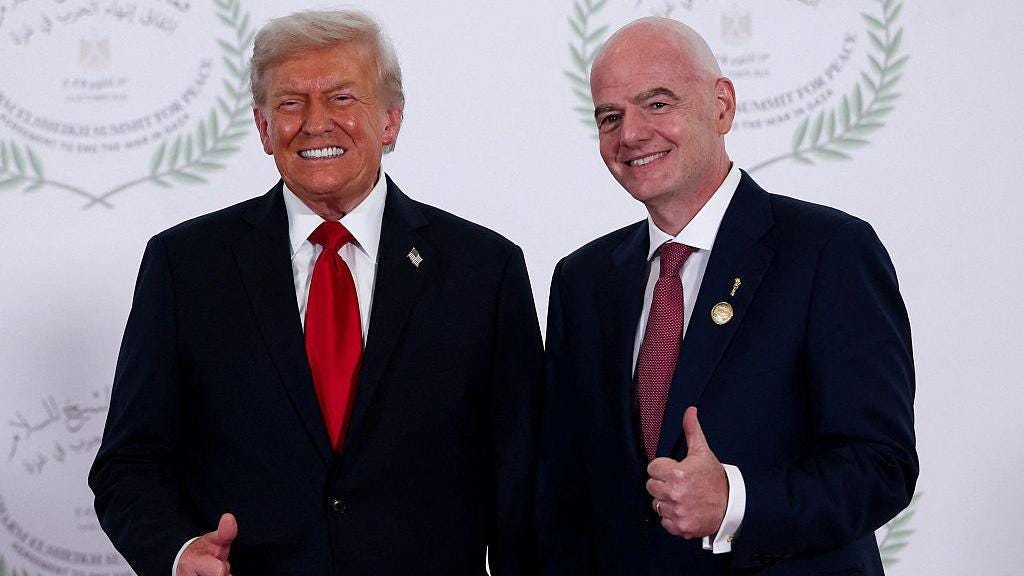
We saw a modern echo of that instinct in FIFA. Leadership announced a proposal that would have handed significant influence over the world’s most popular sport to private equity. In the United States, the reaction was relatively muted. Americans are generally comfortable with private investment and often place greater confidence in individual leadership. Europe responded differently. UEFA immediately threatened a unified boycott of the World Cup—a response so swift that the proposal unraveled almost overnight. It soon became clear that many of the sport’s own stakeholders had never been meaningfully consulted.
Institutions and process are rarely exciting. They frustrate those who prize speed, improvisation, or decisive personal authority. President Trump has often expressed impatience with Europe and with democracies such as Canada, whose institutions make rapid action difficult and concentrate less power in a single office. His administration has often appeared more comfortable dealing with governments where executive authority is unusually centralized than with the slower, consensus-driven politics common across much of Europe.
Europe is different. Perhaps it is the memory of tens of millions dead in two world wars, or the long shadow of the Cold War. Whatever the reason, many Europeans appear less willing to entrust their future to individual personalities alone. They place greater confidence in institutions because institutions—not charismatic leaders—helped prevent Europe from repeating its darkest chapters.
America has many strengths, but our impatience with process can become a weakness.
Europe’s twentieth century taught a lesson Americans have been fortunate not to learn in quite the same way: charismatic leaders shape moments. Institutions shape generations. Europe, perhaps because it paid the higher price, has never forgotten the difference.