

Today began with a sense of unreality. I woke early to reports suggesting that 2026 may arrive more unsettled than even 2025—that the United States had acted decisively in Venezuela and removed Nicolás Maduro from power. Listening to events unfold in real time, I heard a CNN reporter use the word “success” to describe an operation that, in another era, would have demanded weeks of public debate, international consultation, and congressional authorization.
I remember a similar disorientation during the invasion of Iraq. That war, whatever its ultimate failures, at least passed through recognizable democratic rituals: appeals to the United Nations, a public case made to the American people, and an authorization—however flawed—from Congress. Here, there was none of that. The justification seemed to leap, without pause, from fentanyl smuggling on fishing boats to oil tankers and regime legitimacy. The clearest explanation offered was the simplest: Maduro was a bad man, and the decision had been made that he could rule no longer.
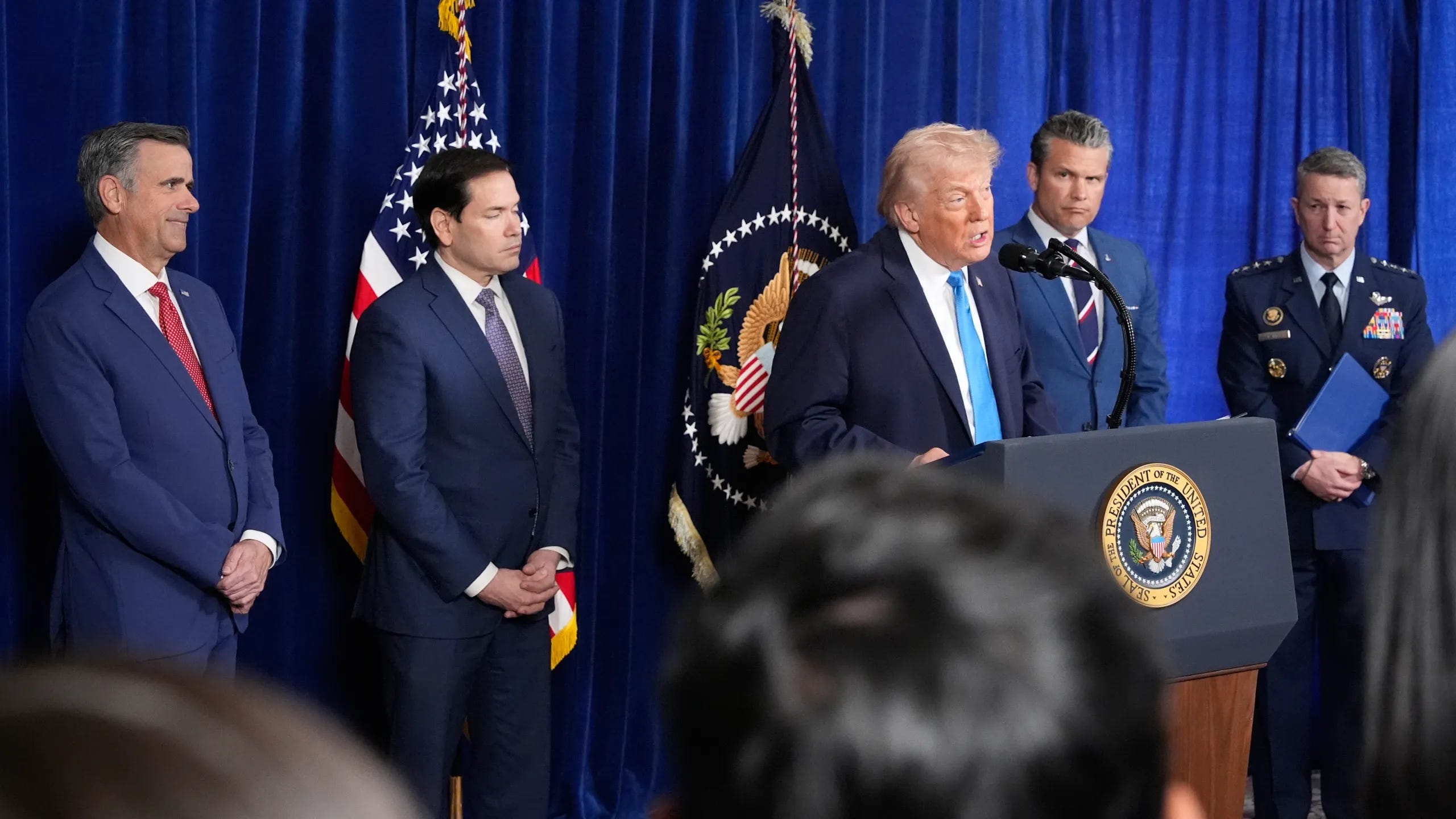
The strangeness deepened when viewers were told that further details would be delivered at an 11 a.m. press conference—not from the White House, not from a secure federal facility, not from Capitol Hill—but from Mar-a-Lago. The removal of a foreign leader, it seemed, would be explained from a private residence, on the grounds of a golf club. We were to learn about illegitimacy abroad from power exercised at home in the most personal of settings.
As the day went on, images circulated of Venezuelans in Miami celebrating. One wondered whether they also wondered who might be watching. Trump supporters praised the decisiveness; critics saw something else entirely. At the briefing, the president described the operation as beautiful, assuring us that this was no pardon of wrongdoing but the removal of a “narco” leader from office. At one point, he spoke casually of how “we’re gonna run Venezuela,” in a manner that sounded less like the assumption of grave international responsibility than the acquisition of a new property—almost as if discussing the management of another golf course.
There were many losers in all of this. The Constitution absorbed another blow, as Congress—long diminished in matters of war and peace—appeared entirely absent. But it is fair to ask whether it had already surrendered that role. And even if laws were strained or broken, the Supreme Court has, in recent years, offered wide latitude for such acts.
Other nations surely took note. Ukraine must feel more exposed tonight. So too might Estonia, Panama, South Korea, Canada, Greenland, Hong Kong, and others who now see how casually legitimacy can be conferred—or withdrawn. Arguments once used to justify aggression elsewhere gain new force when power is exercised without restraint.
What struck me most was the silence. I saw little criticism of the action from the president’s supporters. Those inclined to object had already departed. Independents, perhaps, were newly unsettled. But whether that matters remains an open question.
We are living in a moment when legitimacy itself is being redefined—domestically and abroad—by those with the power to enforce their definition. International institutions weaken. Domestic ones follow. And when rules give way to discretion, what remains is not order, but choice.
History suggests that societies endure not because they always act wisely, but because they preserve the habits that allow wisdom to reassert itself. The danger is not that power is exercised, but that it ceases to feel accountable. When that happens, even victories should give us pause, and force us to ask what we are becoming in the process.