

Amid the turbulence of an escalating conflict with Iran, Donald Trump turned, briefly but tellingly, to Cuba.
The remarks were revealing—and in their omissions, more so than in their claims. The island, he noted, is struggling, its energy supply constrained in part by U.S. policy. It has, in his telling, suffered from poor leadership. It is not especially prone to hurricanes. It would not, therefore, be expensive.
Elsewhere, reports suggested something more ambitious: that the United States might consider taking control of Cuba, in part for business purposes. Notably absent from either framing was any sustained reference to the Cuban people themselves.
This omission is the argument.
Cuba has endured decades of economic pressure, much of it shaped by American policy. With the withdrawal of external support and the tightening of energy supplies, the country now faces conditions reminiscent of its “Special Period”—a time marked by scarcity, improvisation, and strain. Hospitals remain a priority, but rolling blackouts disrupt daily life, closing schools, constraining commerce, and narrowing the space in which ordinary life can function.
And yet, even here, the language diverges. In appealing to the Vatican, Cuban officials have asked Pope Francis to help moderate what they describe, deliberately it would seem, as a “dispute.” Where power speaks in terms of pressure, smaller nations, lacking such instruments, often fall back on the older vocabulary of mediation.
If there is a case to be made against the Cuban government, it should be made clearly and publicly—before the American people, before the international community, and, most importantly, before Cubans themselves.
Assertions are not arguments. Labels are not evidence.
It is also worth asking what standard is being applied. The United States maintains relationships with governments whose records on political freedom and human rights are, at best, uneven. Without a clearly articulated principle, foreign policy risks becoming less a matter of judgment than of preference—asserted rather than argued.
And then there is the question of consequence.
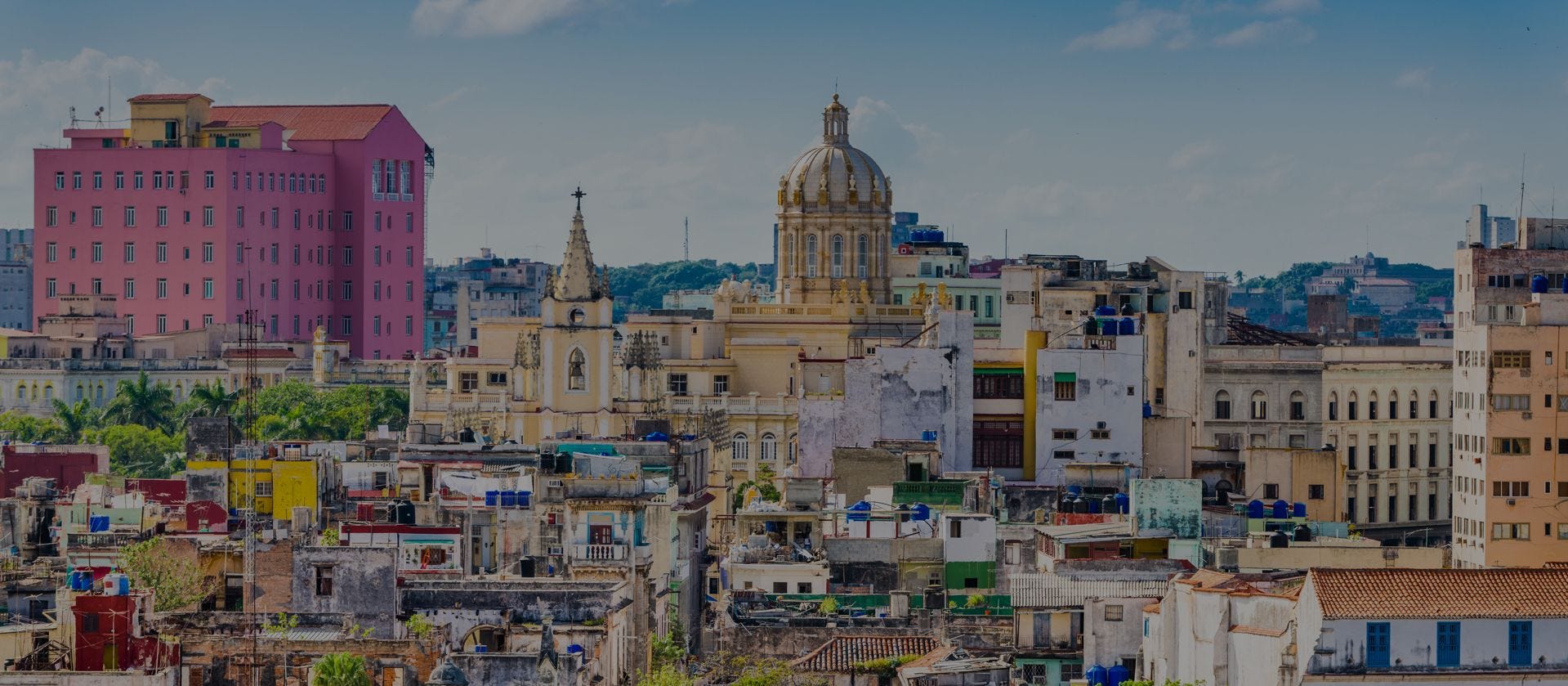
Havana is not an abstraction. It is a living city—its architecture, its music, its cultural memory shaped over centuries. Walk its streets and you encounter not a concept but a people: families adapting to shortages, musicians still filling courtyards at dusk, doctors preparing for assignments far from home. The casual language of intervention can obscure what such actions would entail—not in theory, but in places like this. Cities, once broken, do not easily return. Societies, once disrupted, do not neatly reassemble.
Cuba, for all its economic hardship, has achieved outcomes that complicate easy narratives. Life expectancy and literacy rates compare favorably with far wealthier nations. Its cultural output—music, sport, art—has long exceeded what its size might predict. Its doctors, too, have traveled far beyond its shores, providing care in some of the world’s most difficult conditions. None of this resolves the country’s political contradictions. But neither does it justify ignoring them in one direction while amplifying them in another.
Geography has not spared Cuba. Nor has history. The island has weathered hurricanes, a global pandemic, and decades of geopolitical isolation—often as an object of larger contests rather than a participant in them.
Which brings us, finally, to the question we tend to avoid.
Not simply what kind of government Cuba has.
But what kind of country we intend to be.
A nation that exercises power without explanation, or one that subjects its actions to argument and consent. A country that speaks about other peoples, or one that is willing, however imperfectly, to listen to them.
If the future of Cuba is to be debated, it should not be done in the language of cost alone.
It should begin with a recognition that the country belongs, first and last, to the people who live there—and that no exercise of power, however confidently expressed, relieves us of the obligation to remember it.