

On its face, the ceasefire in the U.S.–Israeli conflict with Iran does not immediately make sense. One might assume that Iran—bearing the greater share of physical damage and casualties—would be the party most eager to pause. Under threat of overwhelming force, one might expect urgency—if not capitulation.
And yet, conflicts of this kind are rarely governed by surface impressions.
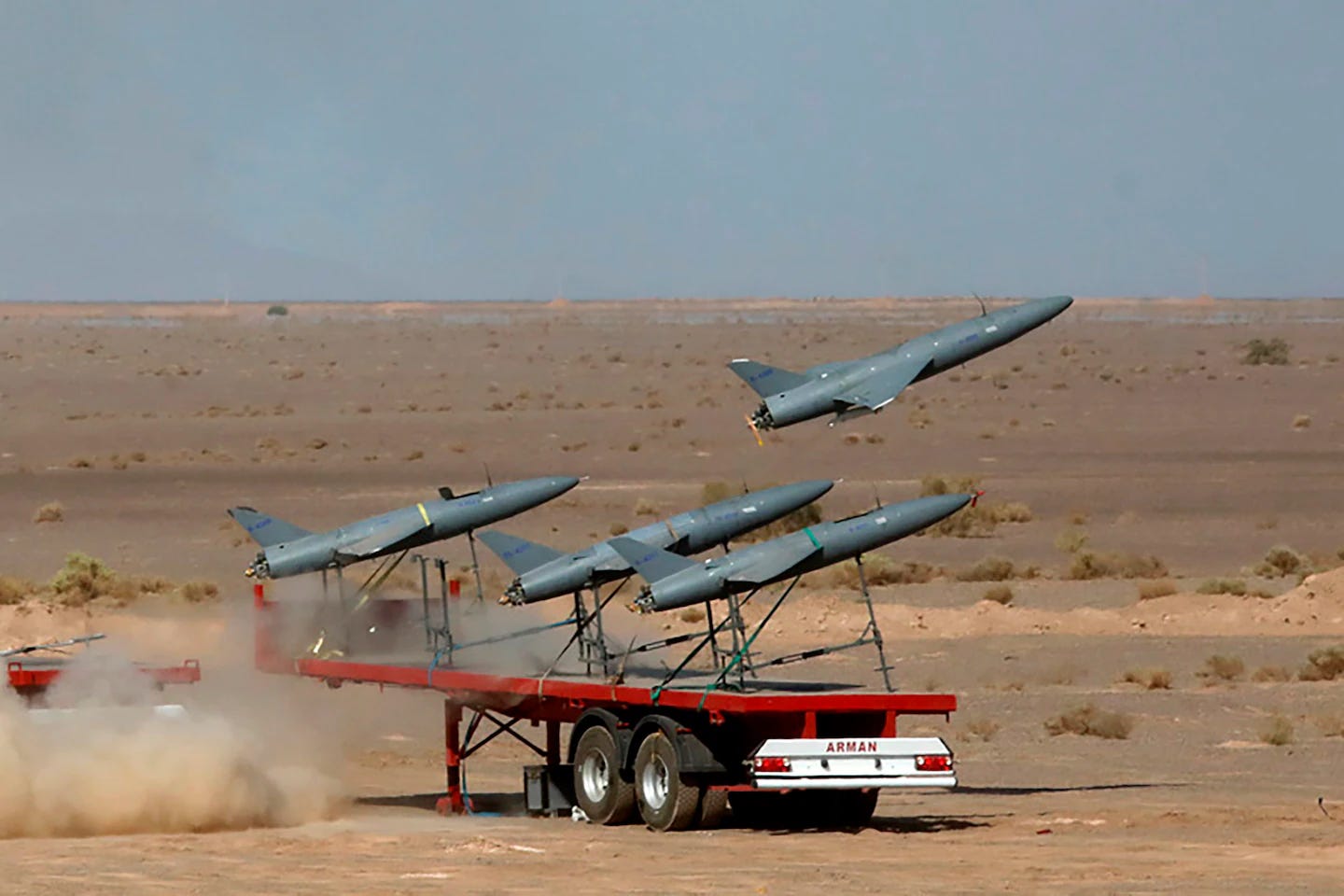
The asymmetry is not only military—it is economic. Iranian drones, while limited in destructive capacity relative to American and Israeli systems, impose a different kind of burden. They are inexpensive to produce and deploy, yet costly to defend against. Each interception relies on sophisticated—and far more expensive—missile defense systems. Over time, the imbalance shifts in a less intuitive direction. The exchange becomes one in which the cost of defense may exceed the cost of attack.
From this perspective, a ceasefire takes on a different logic. It is not merely a pause in hostilities, but a pause in an exchange that, if prolonged, may impose disproportionate costs on the more advanced side.
There are, as well, political considerations. A cessation of conflict may stabilize energy markets, calm financial signals, and offer the electorate—particularly in an election year—the appearance of resolution. Declaring success in such a moment is not unusual. It is, in many respects, how political outcomes are framed.
Strategically, a ceasefire creates time—time to replenish defenses, recalibrate posture, and reassess objectives. Iran, for its part, is unlikely to accept such a pause without terms it deems tolerable, if not advantageous. Trust, under these conditions, remains limited. Negotiation and escalation have coexisted before. There is little reason, from Tehran’s perspective, to assume this moment is entirely different.
Which raises a more difficult question: what constitutes a “win” in such a conflict?
In boxing, a similar dynamic can emerge. A fighter who appears overmatched may be unable to match power with power, but to endure—to absorb punishment, conserve energy, and allow the opponent’s early advantage to dissipate. Muhammad Ali famously employed this approach—his “rope-a-dope”—against George Foreman, absorbing sustained blows before turning the fight in the later rounds. What appears, at first, to be weakness can, over time, become a different kind of strength.
Conflicts can evolve in much the same way.
If escalation leads toward broader destruction—regional, economic, and human—then restraint, even if imperfectly framed, may represent the more prudent course. A ceasefire declared as victory may not capture the full reality. But neither would continued escalation necessarily produce a better one.
There are moments when allowing a political narrative to stand—however incomplete—serves a larger purpose. Not because it is entirely accurate, but because the alternatives carry greater risk.
In certain conflicts, the decisive variable is not victory, but duration—and the costs a nation is willing to sustain.