

There is something faintly baffling—almost anthropological—about Donald Trump’s continued war against the allegedly “stolen” election of 2020. After all, he is president now, enriched daily, presiding over a government that seems designed to convert grievance into revenue with remarkable efficiency. One might have thought victory would have quieted the ghosts.
Instead, he keeps fighting.
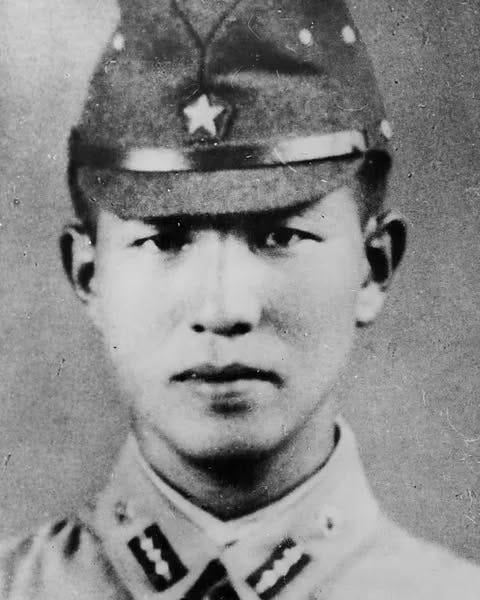
He calls to mind those Japanese soldiers rumored to have remained on remote Pacific islands long after the war had ended—rifles cleaned, uniforms pressed, awaiting orders that would never come. Yet even that analogy falters, because had Japan actually won the war, one imagines the holdouts might have relaxed their vigilance. Trump, by contrast, has prevailed and still insists the battle continues.
Is this mere ego—Trumpian sensitivity elevated to metaphysics? Possibly. The Trump brand, after all, is predicated on winning. Losers are contemptible; therefore, Trump cannot have lost. The syllogism is airtight, at least to its author.
But there may be strategy lurking beneath the theatrics. By relentlessly disputing the legitimacy of past elections, he places subtle pressure on the future ones. Poll workers, vote counters, local officials—all are put on notice. It is not unlike working the referees in basketball: complain loudly and often enough, and perhaps the next close call breaks your way.
There is also the matter of January 6. Relentless insistence that the election was stolen performs a valuable narrative function: it supplies justification. If the republic was under assault, then the assault on the Capitol becomes—depending on one’s vocabulary—a protest, a misunderstanding, or even, as Trump has memorably offered, a “day of love.” The pardons follow naturally.
The difficulty, of course, is that Trump may not himself know which of these explanations is operative. He oscillates between the posture of a grand strategist playing four-dimensional chess and that of a man governed almost entirely by impulse and grievance. Both interpretations are periodically persuasive; neither is reliably explanatory.
My suspicion is that we will never know. Perhaps there is nothing to know. Some obsessions are not strategies at all, merely habits of mind—too ingrained to abandon, even when they have long ceased to be useful.
And so the war goes on, victory notwithstanding.