

Canada is not a country that usually defines itself in reaction to American politics. Yet few nations have had their strategic position altered more abruptly—or more strangely—by a second Trump term.
There has always been a Trump-adjacent constituency north of the border: business interests, cultural conservatives, a faint but real appetite for his performative nationalism. Trump’s first term did not revolt Canada. It unsettled it, certainly, but the relationship endured. This time is different.
Talk of Canada as a “51st state,” of its sovereignty distilled down to two senators and a star on a flag, landed not as bluster but as insult. The suggestion that a country with its own healthcare system, public institutions, universities, cultural life, and hard-won independence should simply be absorbed into the American project revealed a kind of provincial arrogance most Americans scarcely notice—but Canadians immediately recognize. It is Trumpism’s unselfconscious ignorance, scaled up to a continental level.
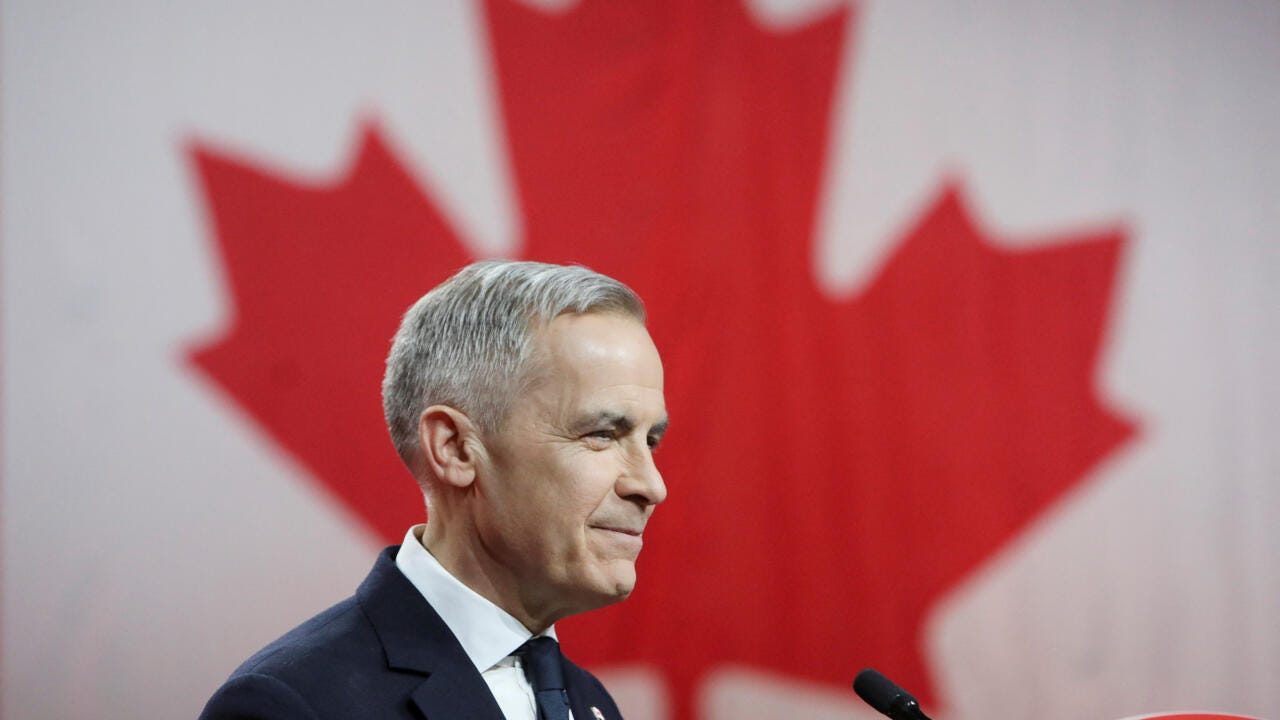
Canada, of course, is harmed by the loss of a steady United States—its largest trading partner, its primary security guarantor, and historically its most reliable neighbor. But history has a way of rewarding the nimble. Trumpism may yet prove to have given Canada an unexpected gift: the rise of Mark Carney, a leader of uncommon seriousness and tactical intelligence, who understands both global finance and the temperament of an erratic American president—and knows how to manage the latter without provoking him.
Canada enters this moment with advantages that are suddenly more visible: oceans on two sides, abundant natural resources, strong universities, a technologically sophisticated economy, and cities—Toronto, Vancouver, Montreal—that are global in character rather than parochial. It also possesses something the United States now treats lightly: deep institutional ties to Europe and the United Kingdom, NATO credibility, and an unbroken record of standing with the Allies in the defining conflicts of the twentieth century.
In a world where Washington appears increasingly unreliable, Canada can do what it has rarely needed to do before—act independently. It can pursue trade with Europe and the UK, deepen ties with Asia, even engage China cautiously where American politics now makes such engagement radioactive. Choosing China over the United States is not in Canada’s nature—but neither is submitting to bullying as a substitute for partnership.
With renewed talk in Washington of a revived Monroe Doctrine, one wonders whether the twenty-first century may produce an unexpected counterweight. “The Canadian Century” may sound grandiose. But quiet, competent states have a way of thriving when louder powers lose their footing. And Canada, adjusting patiently and without theatrics, may yet find itself an indispensable bridge between Europe, Asia, and a post-Trump America still relearning how to behave.
Welcome Julian! So happy to see you on this platform! I look forward to your thought provoking essays and commentary on Substack.