

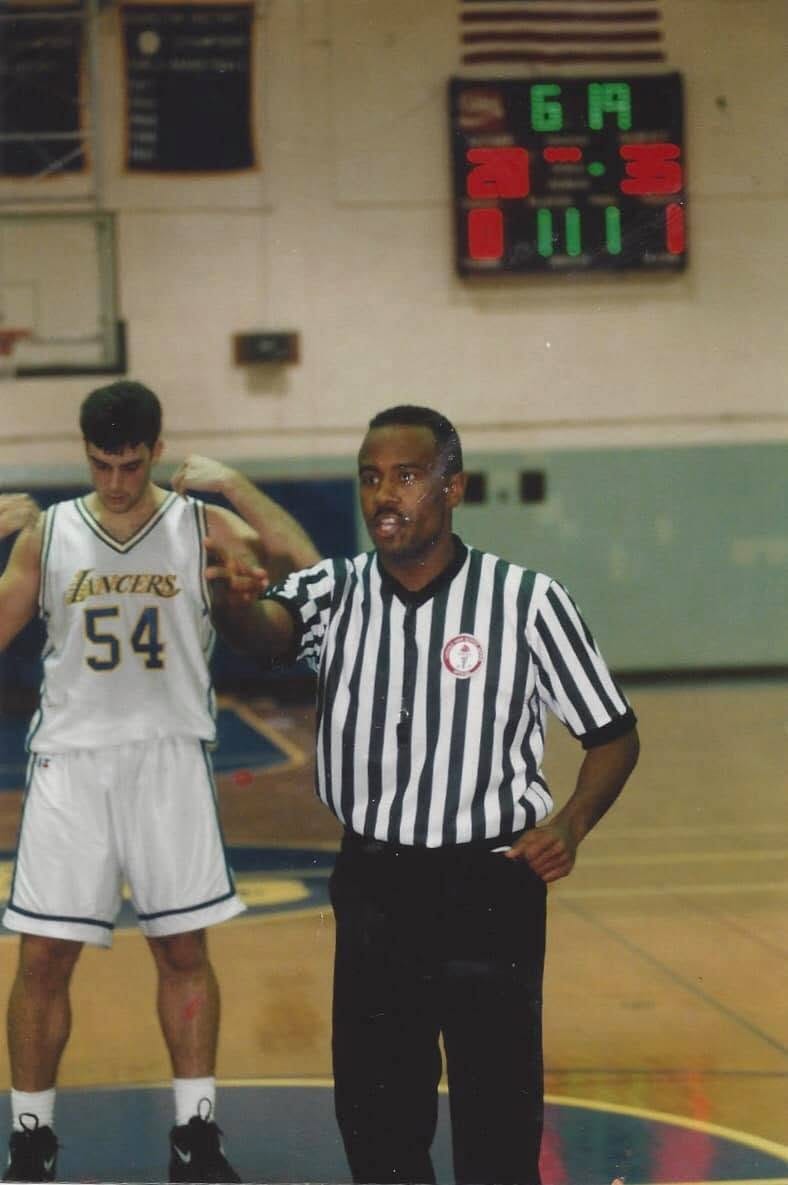
As a basketball official for many years, you learn one rule above all others: call the obvious. Call what has to be called. If you do that well, you leave the floor with the respect of both teams and most of the crowd. From their point of view, you didn’t make the game about yourself. You simply did your job.
Soccer’s embrace of VAR has made that increasingly difficult.
This World Cup has shown how a technology that makes perfect sense in theory can hurt the game in practice. Video replay now scrutinizes moments so closely that the spirit of the sport can get lost. If an offside review reveals that an elbow is a fraction ahead of the defender, or a set piece uncovers contact far from the ball that no one noticed in real time, should that really decide a match? Or are we replacing the judgment we once trusted officials to exercise with something colder and less human?
The job of an official has never been to identify every technical violation. It is to identify the violations that materially affect the contest. That is why experienced officials speak of “calling the obvious.” They understand that sport depends not only on the written rules, but on applying them in a way that players, coaches, and spectators instinctively recognize as fair.
When a sleeve or an elbow determines offside by millimeters, we have drifted away from the purpose of the law. Offside exists to prevent attackers from gaining a meaningful advantage, not to reward forensic measurement. We wanted to catch the striker who timed his run early, not the one who becomes “offside” only after a freeze-frame and a digital line.
Judgment has always been part of sport. Officials miss things, and sometimes those misses shape matches. That has never been a flaw to eliminate completely; it has been part of the human bargain we make when we play games. We ask officials to exercise judgment, not achieve perfection.
The irony is that VAR was supposed to reduce controversy. Instead, it has created a new kind—one that feels clinical, joyless, and disconnected from how players actually play and how supporters actually experience the game.
Perhaps the lesson extends beyond soccer. Precision is a wonderful servant but a poor master. There are times when pursuing absolute accuracy obscures the larger purpose of the rules themselves.
Soccer has always lived with imperfection. It may not survive over-correction.