

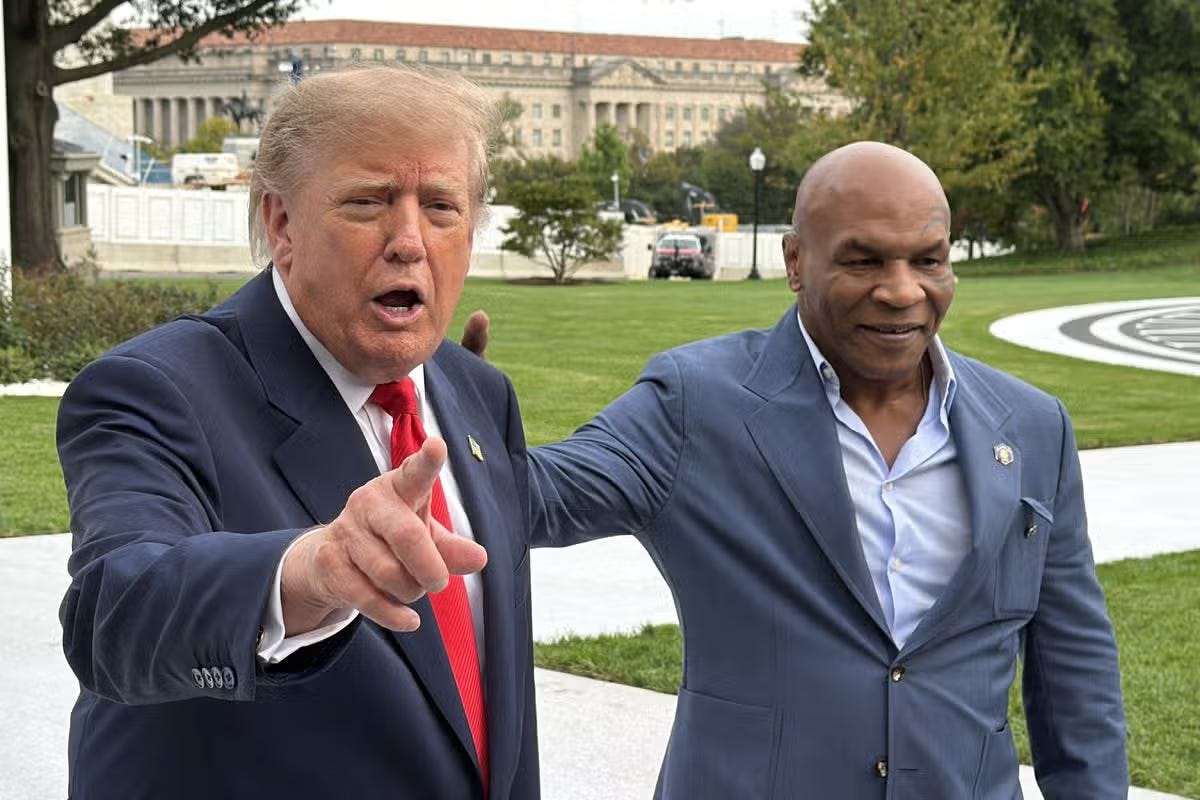
There has always been something faintly comical about the Republican habit of producing a Black celebrity whenever the party wishes to demonstrate its appeal to Black voters.
Donald Trump has made something of an art of it.
The cast has included entertainers, athletes, television personalities, and anyone else sufficiently recognizable and willing to share a stage. Herschel Walker, Steve Harvey, 50 Cent, and others have appeared in Trump’s political orbit in various capacities. Their relationships with him have differed, but the attraction of celebrity has remained remarkably consistent.
Trump improved his historically weak standing among Black men in 2024, although they still voted overwhelmingly against him. Black women remained among the most unified demographic groups in their opposition. Perhaps the strategy has some merit. Or perhaps the political preferences of Black Americans, like those of everyone else, are shaped by considerations more complicated than the presence of a familiar face at a rally.
This season, the parade has acquired a distinctly pugilistic character.
Mike Tyson and Floyd Mayweather have appeared alongside Trump, joining a collection of prominent sporting personalities whose presence is presumably intended to lend the president some of their popularity. Stephen A. Smith has also become part of the broader political conversation.
Tyson and Mayweather are certainly recognizable. They are among the most famous boxers of their generations, men whose achievements in the ring require no explanation.
Their qualifications as interpreters of public policy are somewhat less apparent.
There was a time when the apparent purpose of these appearances was to answer an uncomfortable question about Trump himself. How could a man accused of racial prejudice be so objectionable when prominent Black Americans were willing to associate with him?
The argument was never especially persuasive.
A president can have Black acquaintances, admirers, and political supporters while making statements or pursuing policies that other Black Americans regard as deeply offensive. The existence of the former does not dispose of the concerns of the latter.
And Trump has supplied plenty of material for those concerns. He has repeated discredited stories about Haitian immigrants eating pets, made sweeping accusations about Somali immigrants, and directed personal insults at prominent Black women.
But the question has moved beyond whether Trump harbors racial prejudice. Whatever one concludes about his personal attitudes, he now has a governing record to defend.
That is a rather more demanding assignment for the celebrity contingent.
Can Mike Tyson explain why the administration has made such an extraordinary priority of admitting white South African refugees while restricting opportunities for so many others?
Can Floyd Mayweather explain the administration’s determination to challenge the presentation of American history at the Smithsonian, including exhibits addressing the country’s record of slavery and racial injustice?
Can either man tell Black Americans what the administration’s policies mean for their careers, their economic prospects, or their children’s understanding of American history?
Perhaps they have considered these questions carefully. They are entitled to their political opinions, just as anyone else is. Fame does not disqualify a citizen from participating in politics.
But neither does it confer expertise.
I have listened to Tyson and Mayweather speak. Both possess qualities that made them extraordinary fighters. Neither has struck me as an especially compelling guide to the complexities of government.
That is hardly a criticism of their boxing. Nobody ever asked Floyd Mayweather to explain refugee policy while he was slipping a right hand, and Mike Tyson was not required to offer a coherent account of American history before knocking someone unconscious.
Their greatness belonged to another discipline.
There is a larger difficulty with this approach to politics. Celebrity can attract attention, create enthusiasm, and perhaps encourage someone to attend a rally. But it cannot indefinitely substitute for the experience of living under the policies being defended.
People know what they pay at the grocery store. They recognize when institutions they value come under political pressure. They form judgments about the language their president uses to describe people who look like them.
And they do not necessarily revise those judgments because a former heavyweight champion has taken the microphone.
The administration may continue searching for more impressive names, more enthusiastic endorsements, and more recognizable faces.
Bring on the boxers.
At some point, however, the problem may not be the messenger.
It may be the message.