

The United States has long been the least self-aware country on the global stage. We earned the mantle of democracy and hope after the World Wars and exported a constitutional framework born in the 1700s to much of the world. Yet there was always something slightly artificial about our self-image. We routinely aligned with tyrants, exercised economic and military control far beyond what genuine democracy allows, and preferred democratic institutions only so long as they did not interfere with our interests. Still, intentions mattered. They inspired us to try—however imperfectly—to do better.
Under Trump, our definition of “acceptable” leadership has become newly revealing.
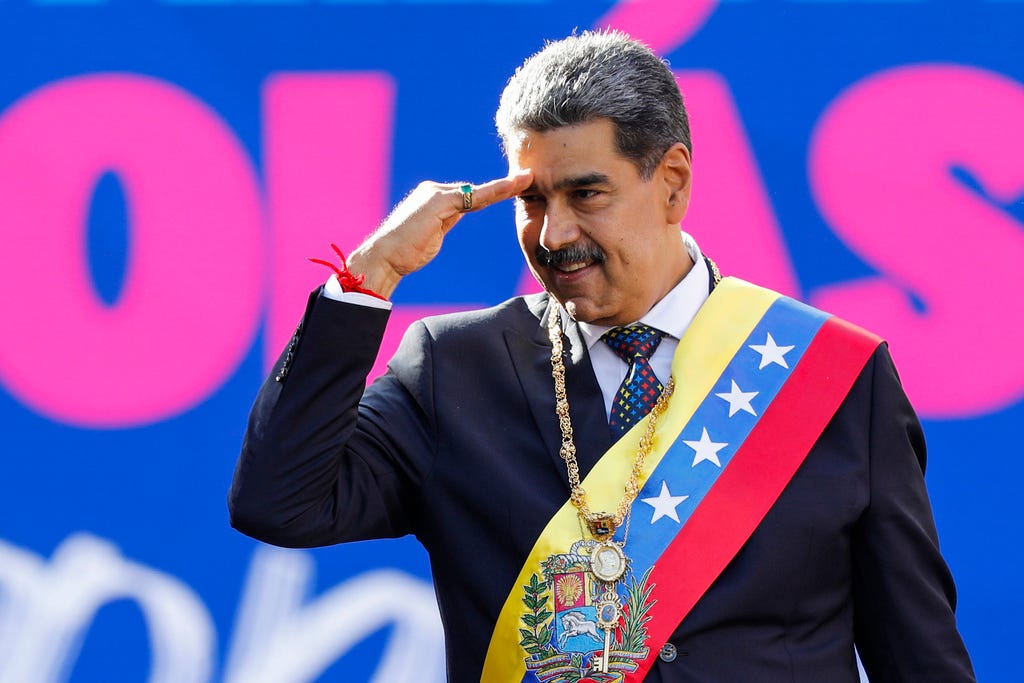
In the aftermath of the removal of Nicolás Maduro, nearly every analyst prefaced their unease with the same assurance: Maduro is a bad man. His government stole elections, plundered the country’s wealth, and drove mass migration. All of this may be true. But it raises an unavoidable question. How is this fundamentally different from our tolerance for, or even admiration of, leaders in Russia and North Korea—or from the indulgence shown toward strongmen elsewhere who undermine institutions while flattering our interests?
Even if one accepts the premise that Venezuela’s democracy can be improved, another question follows: improved toward what?
Are we now the blueprint?
Would we be comfortable with a leader who names buildings after himself, deploys masked agents into cities, deports people without process, pressures the media for loyalty, imposes tariffs without negotiation, floats his own cryptocurrency, bans immigration based on origin, dismantles diversity initiatives, or claims immunity from prosecution? Would we accept a system where election losses are met with mobs at the capital and courts shield leaders from accountability?
If that is the model, who exactly is being helped—and how would we know when it is “working”?
For decades, the world tolerated our contradictions because the United States was still widely seen as a net force for good. That tolerance is thinning. In Europe and Canada especially, the benefit of the doubt is no longer automatic. Even well-intentioned people now ask whether “it” might work—without ever defining what it is.
The danger is not only hypocrisy, though there is plenty of that. It is confusion. When a country loses clarity about the standards it expects of itself, it eventually loses the authority to impose standards on anyone else.
At some point, democracy is not measured by the removal of bad men elsewhere, but by the restraint, accountability, and seriousness we demand at home.