

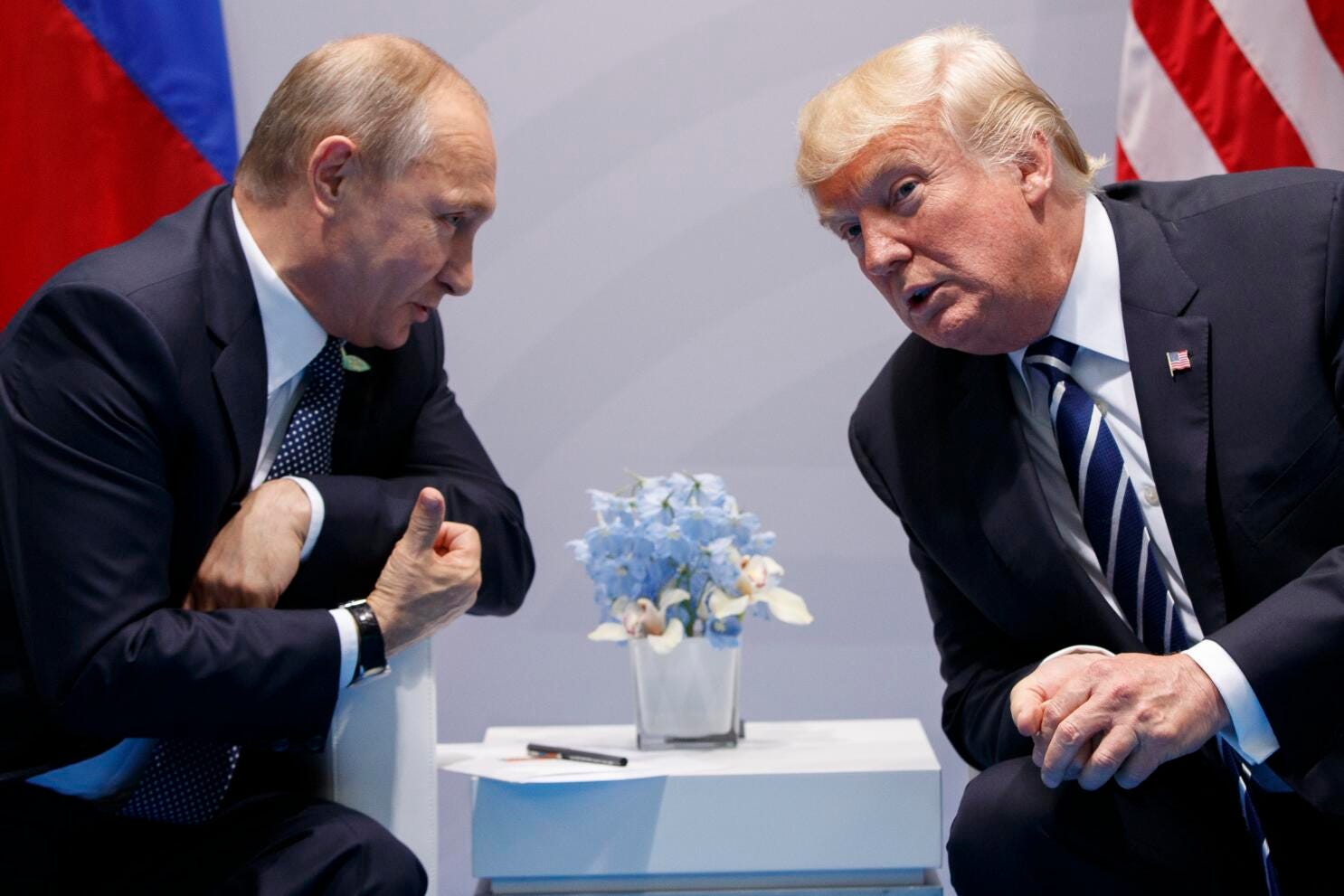
It has long been obvious that Donald Trump admires Vladimir Putin and the power he wields over Russia. Putin presides over enormous personal and state power, enjoys substantial support at home, and governs a system in which dissent is not merely discouraged but dangerous. Trump has repeatedly shown unusual deference toward him, at times expressing more confidence in Putin than in parts of his own national-security establishment. For Putin, the admiration must be flattering; the tormenting of his rival, Volodymyr Zelensky, likely sweeter still.
But Putin delivers in ways Trump rarely attempts—and perhaps, in a strange way, that is to Trump’s credit.
Putin’s political bargain includes tangible benefits from the state. I enjoy watching travel vlogs from around the world, and Russia remains fascinating even now, during the war. It is a country with severe limits on dissent and an extraordinarily expensive real-estate market in its major cities. Yet daily life also includes material supports that matter. Food and alcohol remain comparatively cheap. Health care is publicly provided, though quality varies sharply by region. Families receive financial support for having children. New mothers receive leave and job protections. Long-serving public employees can accumulate meaningful benefits.
None of this makes the system admirable. It does make it easier to understand.
Putin has long understood political loyalty partly as a material bargain. He combines nationalism, repression, state support, and the promise of order. He invokes eras of Russian greatness that were not nearly as glorious as he suggests, while minorities, LGBTQ people, and political opponents can face harsh treatment. The bargain is coercive, but it is still a bargain.
Trump’s populism works differently.
He too plays the patriotism card relentlessly. He too can turn cultural grievance into political loyalty, and he too can involve the country in costly conflicts of his own making. But his idea of providing is more often emotional than material. He offers identity, grievance, spectacle, enemies, rallies, and reassurance that the country remains great because he says it is. High prices become someone else’s fault. Bad news becomes fake news. Political disappointment becomes betrayal.
Putin, by contrast, understands that loyalty is easier to sustain when the state delivers something concrete.
That may be one reason his system has endured as long as it has. Authoritarian governments cannot rely on consent alone. They often survive by offering enough stability, subsidy, and material security to make political passivity tolerable.
Trump’s movement asks for something different: loyalty through identification.
That distinction matters.
Putin delivers the bacon. Trump delivers the performance.
Perhaps that is the strangest part of the comparison. If Americans are to endure all the grievance, disruption, and strongman theater, one might reasonably ask whether we are at least entitled to some of the bacon.