

For fifteen years, much of my life revolved around soccer because of my son Chandler. He played travel, he played for top high-school teams, and he was always a starter—not extraordinary in the mythic sense, but indispensable in the way good teammates often are. When high school ended, he chose the University of Virginia rather than pursuing a Division III roster spot, and I shifted my own attention outward. My social-media world expanded from his team to Northern Virginia sports generally—soccer, basketball, football—and to interviewing some of the great athletes who shaped the region long before my kids were born.
Five grades behind him came my youngest. By eighth grade, we discovered she could sing—really sing—and act. She was headed not for the pitch but for the stage. I knew immediately there would be parallels, though I did not yet know how many.
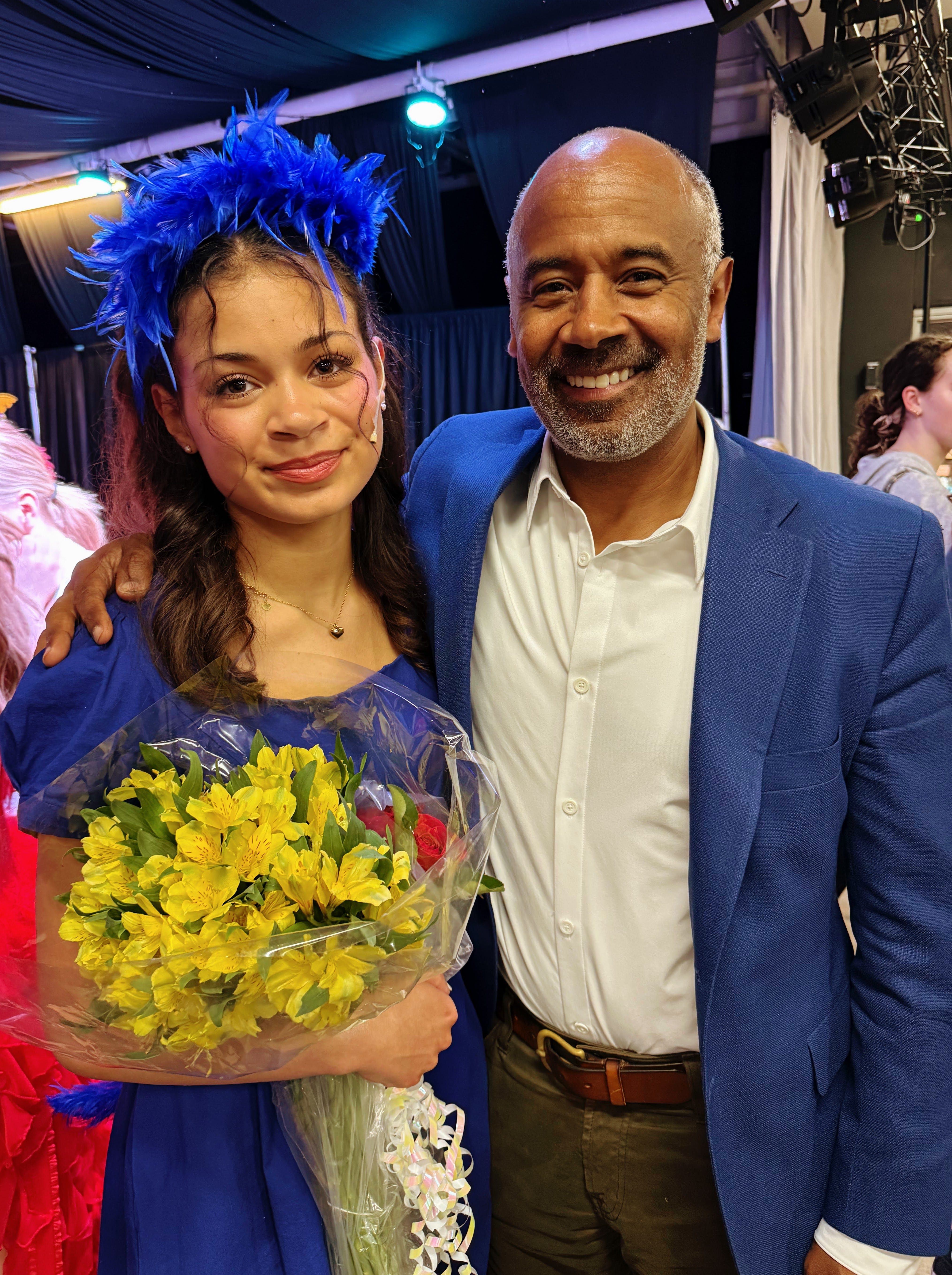
The first difference was startling.
With my son, I had been part of the decision-making—not controlling it, but guiding it, nudging him toward what I thought was optimal. With my daughter, there was none of that. Perhaps I was distracted, perhaps simply tired, but she became the classic third child: self-directed, independent, quietly determined. She chose her roles, her rehearsals, her auditions. We paid for lessons and camps, but the initiative was hers. That autonomy arguably has made her passion deeper. She is not performing for us, though I love seeing her on stage.
From the stands, soccer offers a parent constant action. There are matches often twice a week for nine months of the year, and if that is not enough, you can always watch practice. There is something tranquil about it—the rhythm of the game, the familiar sideline conversations, the small rituals that accumulate into a season.
Theater is different. You rehearse for weeks for a single performance run. You are not welcome at rehearsal. You wait, and then suddenly it is opening night. If your child has a major role, you go to every show. Community theater resembles club soccer—higher level, more opportunities, more roles—but the cadence is still slower for the parent. There is more quiet, more waiting.
The competition differs too. Soccer is about standings, seedings, titles—the measurable pursuit of victory. Theater is about the art itself, the quality of the show, the approval of the audience. There are awards and VHSL competitions, yes, but the real contest is internal: the performer against the role, the role against the imagination.
Yet the worlds mirror each other in one important way:
you are always competing.
In soccer, you fight every day to keep your place in the starting lineup. In theater, you audition for every role, which means heartbreak arrives not once a year but several times. And just as the same core group tends to earn the most minutes on the field, the same cluster of seasoned performers often lands the major roles on stage. The rhythm is familiar: talent rises, experience compounds, and hierarchy—fair or not—becomes part of the landscape.
The ambitions run parallel as well. The best young actors aim for top drama programs just as the best athletes aim for top college teams. Scholarships exist, though they are rarer. A few may dream of Broadway the way others dream of the Premier League, but I have yet to meet a high-school performer with an NIL deal—though in this era of influencers, who knows what the future holds.
Parents volunteer in both worlds, though the motivations are probably mixed. In soccer, I was a team manager because I loved the program and wanted to help. Theater has its own politics and social currents, just as sports do. But in both arenas, the best usually rise.
The greatest difference, though, is memory.
Sports give you memories you can replay. We film everything—highlights, full matches, celebrations. I still watch my son’s best moments, and even my own ancient football and basketball clips, to the horror of my children. What is not recorded fades. Memory is a fragile thing; it needs corroboration.
Theater does not allow that luxury. Photography is forbidden. Videotaping is forbidden. A theater may release a few promotional shots, but the performances themselves vanish into the air. Community theaters are slightly more forgiving, but even then, the rules are strict. We sneak in cell phones, take furtive videos, and hope not to be caught. The result is grainy, shaky, imperfect—but precious.
My daughter played Regina in Mean Girls, a huge role in an iconic show. Another favorite memory comes from a production of Grease, when she sang “Raining on Prom Night.” The memories are warm, but already softening at the edges. I cherish the bootleg clips I managed to keep. I will watch them for the rest of my life.
Sports endure through replay. Theater endures through memory alone. Perhaps that is why one feels permanent and the other feels almost unbearably fragile.