

It was a remarkable week in American politics.
In a week when his Administration called for a live streamed, public execution, the President of the United States has spoken openly of regime change in Ukraine. In the same week, Donald Trump suggested that Vladimir Putin should be welcomed back to the G20 while imposing sanctions on the International Criminal Court.
Faced with such developments, it becomes increasingly difficult to discern where principle ends and expediency begins.
The contradictions are particularly striking when it comes to Ukraine.
Volodymyr Zelensky has been criticized by Trump for authorizing strikes against Russian oil and gas infrastructure. Yet it was Vladimir Putin who invaded Ukraine, whose forces have bombarded Ukrainian cities, killed civilians, and repeatedly targeted the country’s energy network.
Ukraine did not invade Russia. Russia invaded Ukraine.
The criticism becomes even harder to understand when one considers that the United States has itself targeted Iranian energy infrastructure and threatened the annihilation of the whole country. Iran did not invade the United States. Yet the American president objects to Ukraine striking the energy infrastructure of the country that invaded it.
And then there is Putin himself, whose invasion has devastated Ukrainian communities and who continues to demand concessions from the nation he attacked. His treatment by the American president stands in striking contrast to the criticism directed at Ukraine’s elected leader.
Soon, Americans will elect every member of the House of Representatives and one-third of the Senate.
There was a time when a change in congressional control would have been expected to produce an orderly transfer of power. The fact that such an expectation can no longer be taken entirely for granted says something about the political moment in which we live.
Yet the obligation to vote remains.
For those seeking a Democratic majority, the immediate constitutional purpose is straightforward: to place Congress under opposition control and restore a measure of oversight and accountability.
Congress was never intended to serve as an echo of the presidency. It was designed, in part, to check it.
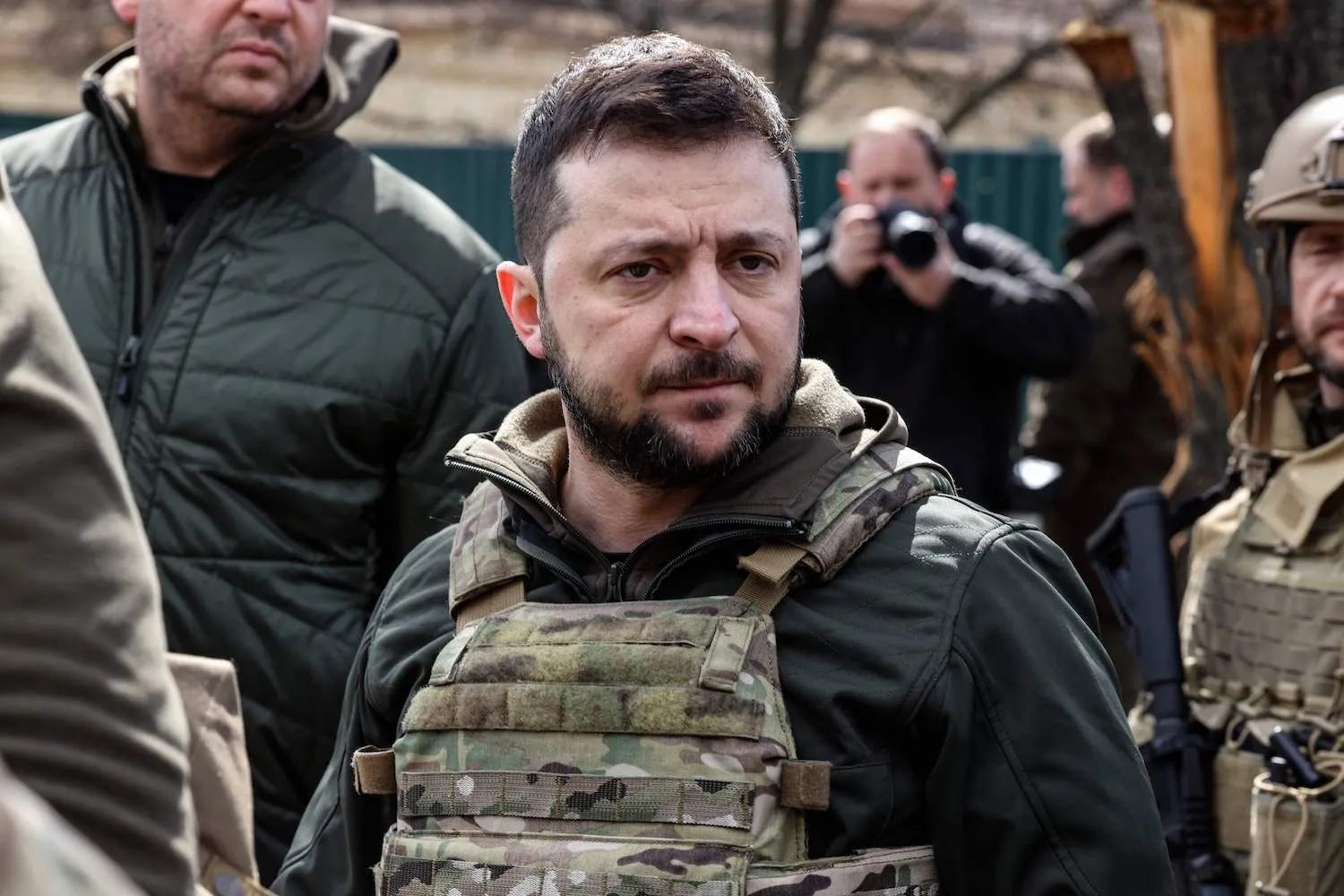
In that broader sense, a vote in the American midterms can also be understood as a vote for Zelensky and for democracies around the world. Not because an American ballot can determine their futures, but because the willingness of the United States to defend democratic institutions, respect the sovereignty of other nations, and restrain presidential interference in their affairs is itself at issue.
The coming election will not resolve every question surrounding Ukraine, Russia, Iran, or international justice. But it can determine whether the president faces an independent Congress prepared to ask those questions.
That is not a small matter.