

I was out with friends this week—nothing formal, just a few drinks and familiar conversation—when someone asked me how racism has affected me.
It was an old friend, and the question came from a sincere place. I appreciated that. It is the kind of question I have considered often, though I have never found it easy to answer cleanly.
Part of the difficulty is that my experience does not fit into a single frame.
I grew up with remarkable parents—people who, despite modest beginnings, ensured that their children would have opportunities they themselves had not. We lived in Northern Virginia, among the families of government workers and military personnel, in a place that, by the standards of the 1970s, navigated integration with a measure of steadiness. I saw successful Black families, struggling white families, and a general sense—imperfect, but real—that opportunity existed for those prepared to meet it.
I was a good student. I was athletic. Those things matter more than we sometimes admit—they open doors, soften edges, and make social navigation easier.
And so, for much of my early life, I experienced the country less as an obstacle and more as a landscape—one in which racism was present, certainly, but not defining. It was one of several challenges a person might face, not the only one, and not always the most immediate.
That, too, is a form of fortune.
I came of age professionally at a time when the country—imperfectly, but intentionally—was widening access. The idea that institutions should make room for those previously excluded was not especially controversial in the circles I inhabited. One could debate pace, method, or scope, but the direction itself was broadly accepted.
My timing, in that sense, was good.
But none of this means the absence of racism.
I have had encounters that unsettled—moments with law enforcement that felt less like routine interaction and more like something precarious. I have heard the language—direct, unmistakable—that leaves no ambiguity about how one is seen. I have experienced the quieter forms as well: exclusion that is difficult to prove but easy to feel.
These things are not imagined.
They exist alongside the opportunities. They do not erase them, but neither are they erased by them.
And so the answer, if there is one, is not simple: I have lived in a country that has, at times, extended real opportunity—and at other times reminded me, abruptly, of its limits.
What concerns me more now is not my own experience, but the environment my son inherits.
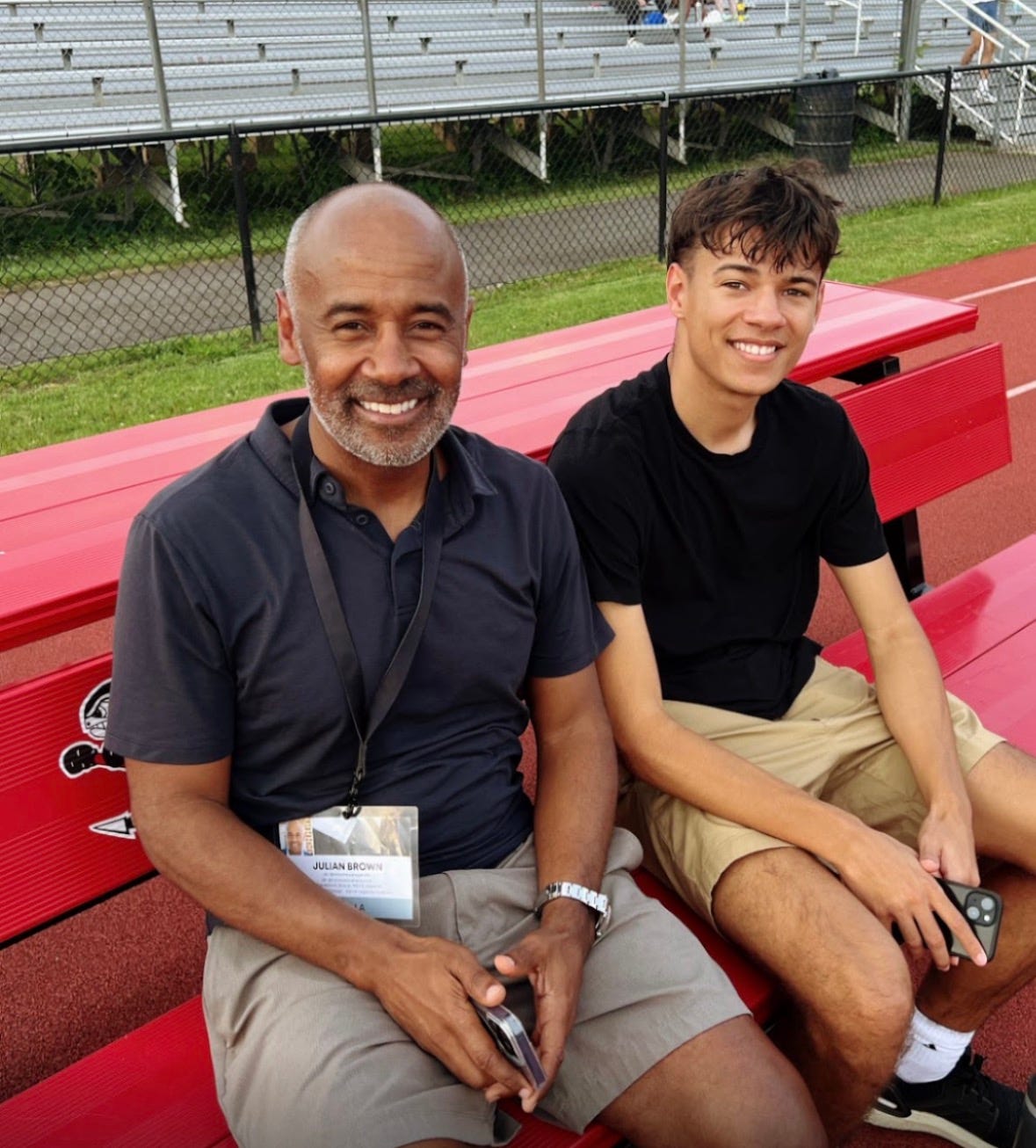
He is, in every measurable way, better positioned than I was—smarter, more capable, more at ease in the world. And yet I find myself less certain about the direction of the country around him.
In my youth, the central questions were pragmatic: how best to expand opportunity, how quickly change could occur, what role government should play. The underlying premise—that inclusion was a goal worth pursuing—was rarely in doubt.
Today, that premise itself is more openly contested.
At the highest levels of government, the debate has shifted—from how to pursue diversity and inclusion to whether such efforts are justified at all. There are arguments that these initiatives create new inequities, or that longstanding disparities are overstated or beside the point. These are no longer peripheral views. They are part of the mainstream conversation.
At the same time, there are developments that feel less abstract. The idea that a person might be required—based on appearance, language, or assumption—to demonstrate belonging under uncertain conditions introduces a different kind of unease. It is not theoretical. It is immediate.
One can acknowledge that the country has made progress and still recognize that progress is not linear—nor guaranteed.
One can be grateful for opportunity and still insist on dignity.
Those are not contradictions. They are obligations.
I do not fear for my son’s ability to succeed. He will find his way, as many have.
But I am less certain about the direction of the environment in which he will have to do so.
And that, perhaps, is the answer I could not quite give across the table.
Not that racism has defined my life.
But that it remains present enough—and contested enough—that I cannot yet be certain it will not define part of his.
Which is to say: we have come some distance.
But we are not yet securely pointed in the right direction.