

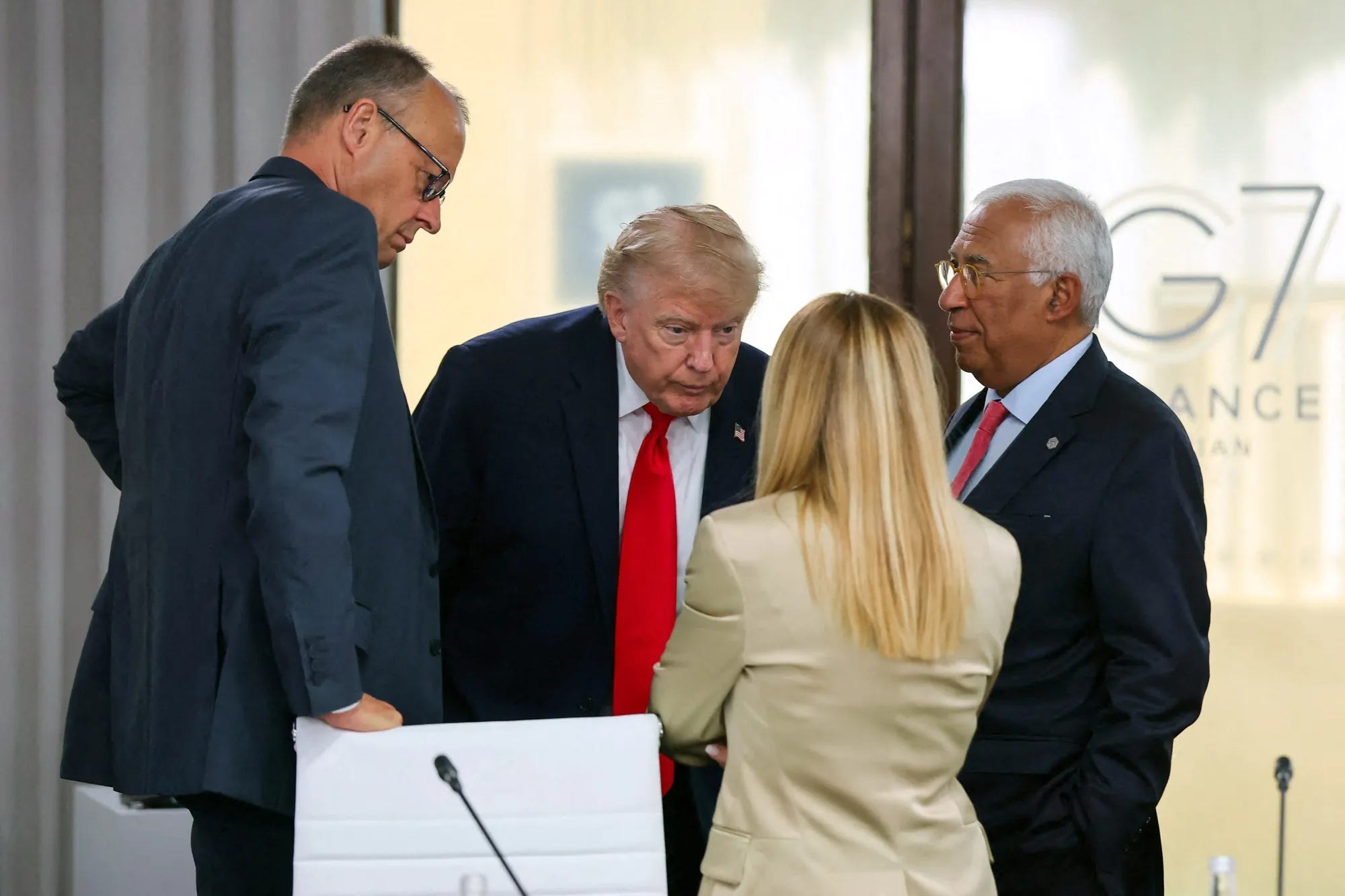
The G7 meeting and the Switzerland negotiations produced enough drama to fill a season of political theater. President Trump criticized Italian Prime Minister Giorgia Meloni for not helping in Iran, then mocked her for supposedly asking him for a photo. Hours later, the United States — through Pete Hegseth — scolded allies for failing to join a war they were never consulted about in the first place.
It is difficult to fault allies for not endorsing a military operation they neither requested nor agreed with. From the outset, the conduct of the war has been uneven. Never seeking international approval, Washington has issued threats to “destroy infrastructure,” promised to “blow them up,” declared that terms had been reached, then reversed course — often within the same news cycle. And the American delegation is not led by seasoned diplomats but by a rotating cast of family members, political loyalists, and business acquaintances.
Against that backdrop, the contrast in Switzerland has been striking. For all the differences in foreign policy, Iran has behaved like the more rational actor in these negotiations. Its representatives have pressed for — and secured — terms that would have been unthinkable months ago: the prospect of sanctions relief, continued leverage over the Strait of Hormuz, constraints on Israeli operations in Lebanon, and even reparations. Their representatives have been disciplined and professional. The American president, meanwhile, has publicly threatened to kill the negotiators and their country.
This raises a question that Americans rarely ask out loud.
When we say certain nations “cannot be allowed” to possess nuclear weapons, what do we mean? Who, exactly, is the unstable party? Who is behaving unpredictably? Who is escalating rhetoric? Who is negotiating in good faith — and who is not?
It is possible that the answer is not as flattering to us as we assume.
If anything, the past week has revealed a truth that allies have understood for some time: power does not automatically confer coherence, and military strength does not guarantee diplomatic seriousness. A nation can be mighty and still appear erratic. It can be feared and still be doubted. It can insist that others cannot be trusted with nuclear weapons while behaving in ways that raise uncomfortable questions about its own judgment.
Perhaps that is the part we have the hardest time seeing — not because it is untrue, but because it is us.