

As the son of a Baptist minister—grandson and nephew as well—there was always something unmistakably religious about Christmas in our house. We didn’t always go to church, but the gospel played in the background and prayer was part of the air we breathed. Still, like most children, Christmas morning was about the presents—finally opened after weeks of staring at them in the Sears catalog.
Many Christians and non-Christians lament the commercialization of Christmas. I’ve always been more forgiving. Even if you don’t believe the myth, you can still believe in the spirit—in generosity, in kindness, in the temporary truce we call goodwill. And for a while, that seemed enough.
But myths collide.
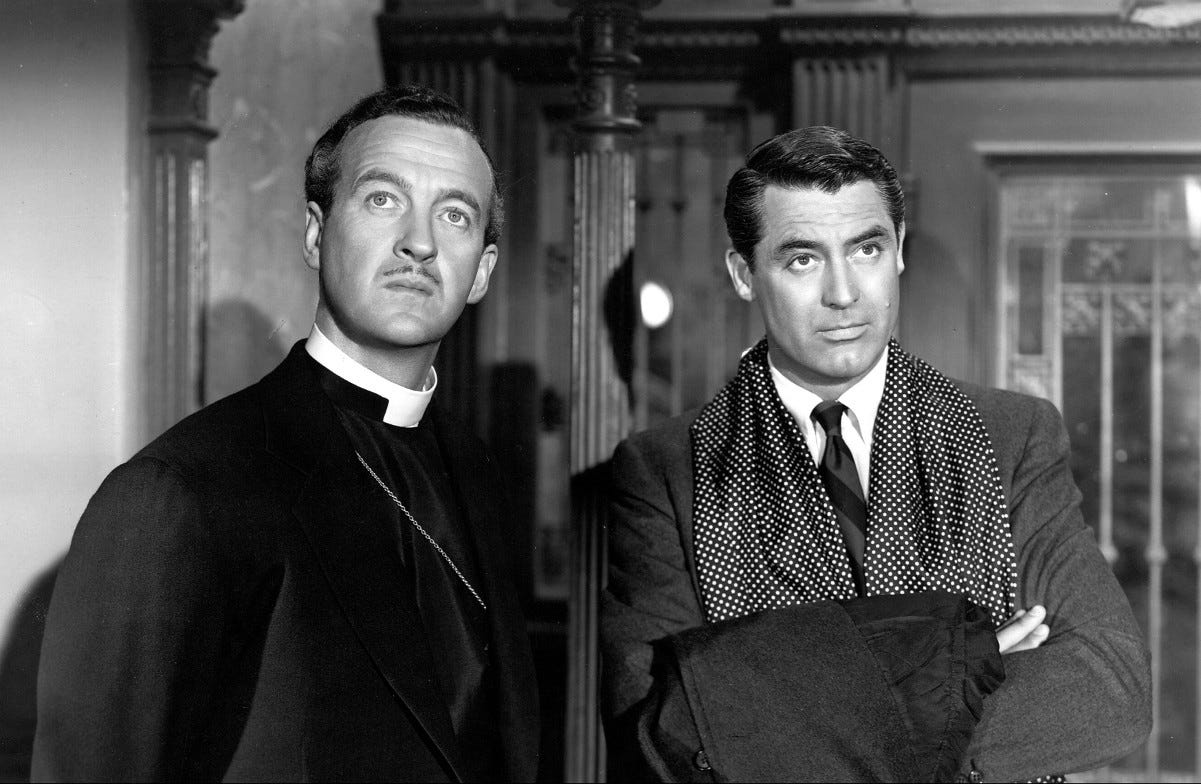
There is a sermon—delivered not from a pulpit but from a film—that believers and skeptics alike can stand behind. In The Bishop’s Wife, David Niven plays an Episcopalian bishop gently reminded of his purpose by Dudley, the finest angel ever put on screen, played by Cary Grant.
In this quietly ecumenical moment, the bishop turns away from both the commerce and the mythology of the season and asks a far more unsettling question: what would the child himself want?
Not gifts.
Not reverence.
Not even belief.
Just decency.
In that question—and in that film—I still find hope.
Merry Christmas.